Can betta fish live with shrimp?
Amano shrimp, usually. Cherry shrimp, only if you are comfortable running a colony that feeds the betta. The distinction is the whole article.
We earn a commission if you buy through the links on this page, at no extra cost to you. It never changes a ranking, and there are products recommended here with no affiliate link behind them at all. Full disclosure.
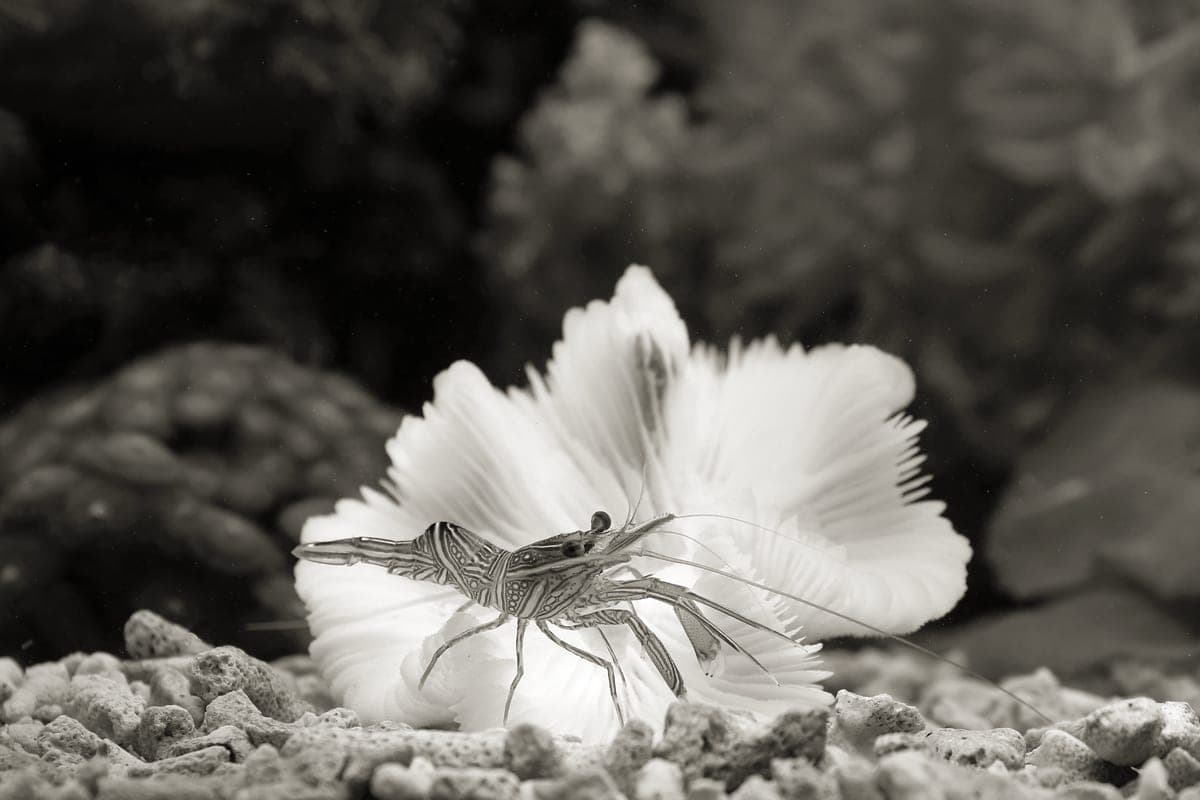
The short answer
Amano shrimp: usually yes, at five gallons and up, with dense cover. An adult Amano is large enough that most bettas lose interest.
Cherry shrimp: only if you have decided how you feel about it. Cherries breed readily in fresh water, so in a betta tank you are running a colony that continuously produces shrimplets, most of which get eaten. Some keepers regard that as a functioning system. Others find it upsetting. Both are reasonable; decide before you buy, not afterwards.
Ghost shrimp: usually no. Smaller, frequently sold as feeder stock in poor condition, and the most likely of the three to be eaten outright.
Why size decides it
A betta eats what fits in its mouth and pursues what moves like prey. An adult Amano is one to two inches, which is at or beyond the limit of what a betta can swallow, and it moves deliberately rather than darting. A cherry shrimp is under an inch, and a shrimplet is a few millimeters.
That is the whole mechanism. It is not about temperament, and no amount of feeding the betta first changes it.
Cover is not optional
A shrimp’s defense is being somewhere the betta is not. Without cover, “usually works” becomes “usually does not”.
Moss is the single best shrimp cover there is - dense enough to hide in, and it grows the biofilm shrimp graze on.
Java fern and anubias tied to wood give structure at several heights. Aquarium Co-Op publishes both as low-light with no CO2 requirement, so they work in any tank without extra equipment.
Hardscape with gaps. A cave, a stack of stone, anything with an underside.
Shrimp are also considerably more sensitive to water quality than fish, so all of this presupposes a tank that has been properly cycled and stable for weeks. Shrimp are usually the first thing to die in a tank that is not.
The impeller problem
Shrimp, and especially shrimplets, get drawn into powered filter intakes. This is a far more common cause of shrimp loss than the betta is, and it goes unnoticed because the shrimp simply disappear.
Fit a coarse pre-filter sponge over any intake - a couple of dollars, no downside - or run a sponge filter, which has no impeller at all. On a shrimp tank the sponge filter is close to standard practice for exactly this reason.
Molting, and the disappearance that is not a death
Shrimp shed their exoskeleton as they grow, and for a few hours afterwards they are soft and vulnerable, so they hide. Two things follow.
First, if you cannot find your shrimp, they are probably molting rather than eaten - give it a day before concluding anything. Second, the discarded shell looks exactly like a dead shrimp, right down to the shape, and people panic about it constantly. A dead shrimp turns opaque pink-white; a molt stays translucent and is usually split along the back.
Leave the molt in the tank. The shrimp will eat it back for the calcium.
How many
In a rated 5-gallon holding 4.3 gallons of water: two or three Amano, and that is the ceiling. In a ten-gallon, five or six. Shrimp have a small bioload individually but a colony is not nothing, and this is a tank that already contains a betta.
What we cannot tell you
Whether your individual betta will accept them. Some bettas ignore Amano shrimp entirely, and some hunt them persistently and successfully. There is no way to know in advance, which is why you need somewhere for the shrimp to go if it does not work out - and why we would not suggest starting with an expensive color-morph shrimp.
What we would buy for this
Chosen from the same registry as our roundups, on published specifications and the arithmetic they imply - not on testing we have not done.
Nano sponge filter with air pump
The cheapest correct answer for a betta, and the one we would fit if we could only fit one thing. A sponge filter has no impeller, no outflow jet and no way to shred a fin. It is also the only filtration in this list that keeps working when the power comes back on after an outage without needing to re-prime. What it does not have is a manufacturer: these are sold under a dozen interchangeable brands with no published specifications at all, and we are not going to pretend otherwise.
Skip it if: You cannot live with an air pump humming on your desk, or with a black sponge in the corner of the display.
Java Fern
The other rhizome plant, and the one that gives a small tank height without needing a substrate. Same rules as anubias: tie it to wood, never bury the rhizome, low light, no CO2. It grows faster than anubias, which makes it the better choice if you want the plants doing real nitrate work.
Skip it if: You want a tidy plant. Java fern throws plantlets off its own leaves and will slowly colonize everything you tie it near.
Anubias Nana Petite
The single most useful plant in a betta tank. It attaches to hardscape rather than rooting, it wants low light and no CO2, and its leaves are stiff enough to hold a sleeping betta. Aquarium Co-Op publishes the numbers that matter: 10-20 PAR, no CO2 requirement, attach to rocks or wood.
Skip it if: You intend to bury the rhizome. Anubias rots when the rhizome is planted, and this is the most common way people kill it.
Frequently asked
Will a betta eat shrimp?
It will eat anything that fits in its mouth and moves like prey. Adult Amano shrimp are usually too large; cherry shrimp and especially shrimplets are not. Cover changes the odds substantially but does not remove the risk.
How many shrimp with a betta in a 5-gallon?
Two or three Amano, with dense cover, in a tank that has been cycled and stable for weeks. That is the ceiling at 4.3 gallons of actual water.
Can cherry shrimp breed in a betta tank?
They will breed; whether the colony grows depends on how much cover there is and how determined the betta is. In a heavily planted tank a cherry colony can out-breed the predation and both animals live normally. In a sparse tank it will be eaten out.
Why did my shrimp disappear?
Three usual causes, in order of likelihood: molting and hiding, drawn into a filter intake, or eaten. Check for a translucent split shell before assuming the worst, and fit a pre-filter sponge regardless.
Do shrimp need a heater too?
Amano and cherry shrimp are comfortable in the range a betta needs, so the same heater serves both. They are less tolerant of swings than the fish is, which is another argument for sizing the heater properly rather than approximately.