Skip to content
Glass & Gravel
Roundup

The best shrimp food for a nano tank

A cherry shrimp colony in a planted tank needs one small tub of food and no supplements. The interesting part is which published numbers justify which claim.

By Scooter M., Enthusiast. Published October 17, 2026.

We earn a commission if you buy through the links on this page, at no extra cost to you. It never changes a ranking, and there are products recommended here with no affiliate link behind them at all. Full disclosure.

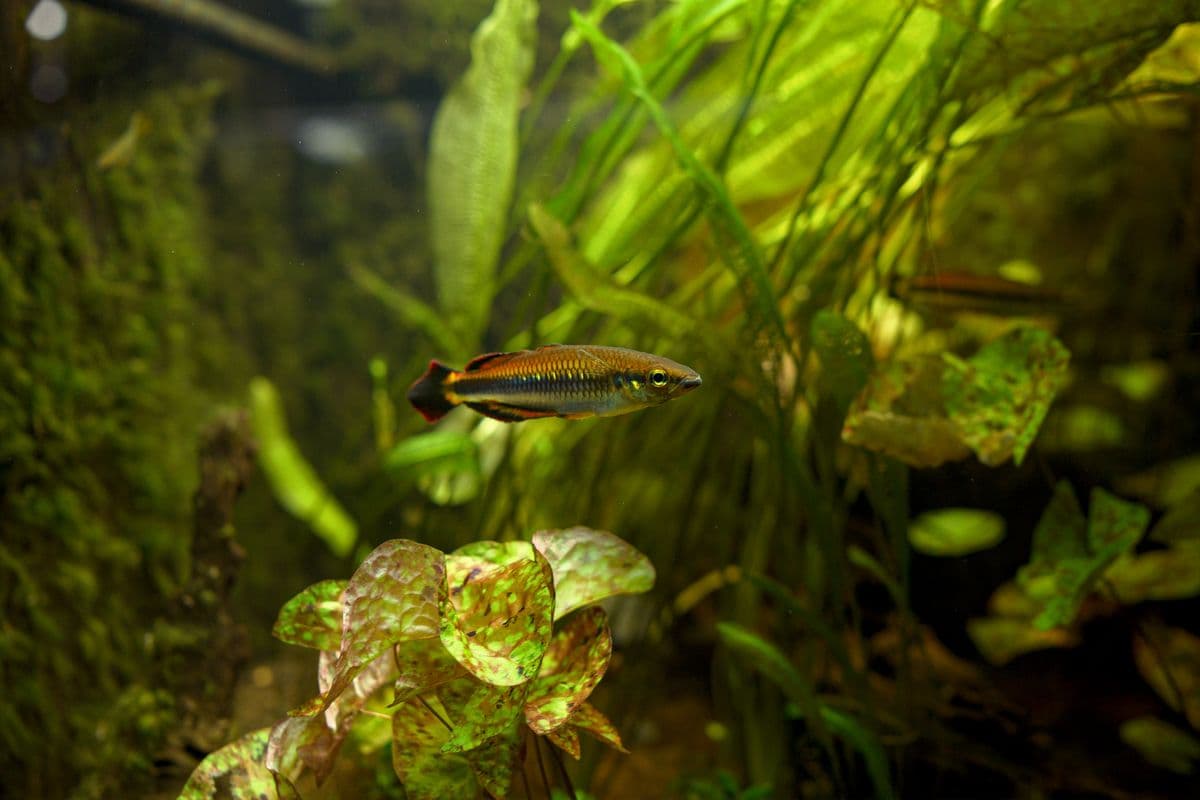
A densely planted aquarium with a fish among green foliage
Quick picks

The shortlist, ranked

Ranked on published manufacturer specifications and, where the figures exist, on the arithmetic they imply for a tank this size. Tap any row for the full write-up, including who should skip it.

#ProductBest forScorePrice
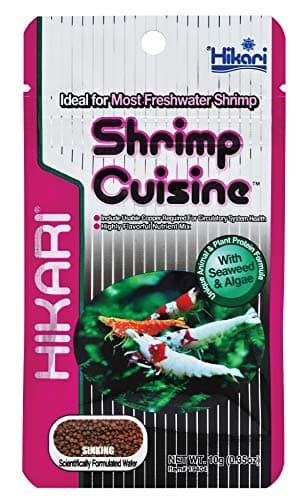
01Hikari Shrimp Cuisine, 0.35 ozHikari Shrimp Cuisine, 0.35 ozThe single daily food for a cherry or Amano colony in a nano tankBest everyday shrimp food8.5$6.97 - View on Amazon
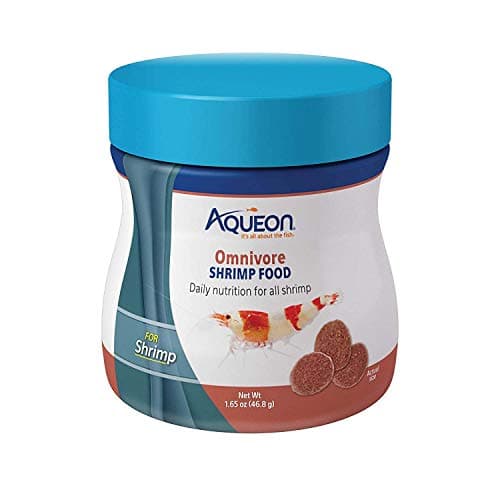
02Aqueon Omnivore Shrimp Discs, 1.65 ozAqueon Omnivore Shrimp Discs, 1.65 ozFeeding a colony cheaply, and for anyone who wants the clay without the Hikari price per gramBest value for a growing colony7.0$3.87 - View on Amazon
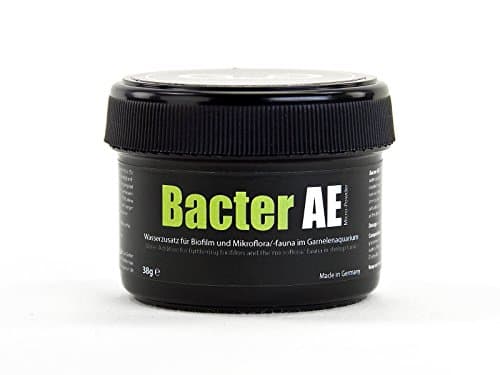
03GlasGarten Bacter AE, 35 gGlasGarten Bacter AE, 35 gA colony you are trying to breed, where shrimplet survival is the goal and biofilm is the foodBest for breeding, with a caveat6.8$17.99 - View on Amazon

Scores are ours and editorial. They are never published as review or rating markup, because we have not tested these products.

The answer first

Buy Hikari Shrimp Cuisine, and buy nothing else. It is the only food on this page with a complete published guaranteed analysis, and in a planted nano tank one 10 g tub lasts a cherry colony months. Hikari publishes 35% minimum protein, 14% maximum ash and 0.8% minimum phosphorus, names Caridina and Neocaridina specifically, and states that its mineral mix offers the nutrients “fundamental to proper ecdysis” - which is the only molting claim here with a published figure anywhere near it.

Buy the Aqueon discs instead if you are feeding a large or growing colony and the price per gram matters. Four dollars for 1.65 oz against seven for 0.35, with bentonite clay Aqueon publishes as aiding molting and shell production, and no fish meal. The trade is transparency: Aqueon publishes no guaranteed analysis for the discs at all.

Buy Bacter AE only if you are breeding, and dose it far under whatever chart you are reading. It is the community’s favorite and the published dose schedules disagree by roughly twenty-eight fold for the same tank volume, with no manufacturer page left to settle it. That is a real problem on a bacterial powder, and it is why a product we rate highly sits third.

Start by feeding less, not by buying more

Aqueon publishes that dwarf shrimp are “largely algae eaters” and that you should feed only what they clear in two to three minutes. Our shrimp tank page makes the same point: in a planted, established tank a colony finds most of its own food, and the most common error is feeding a shrimp tank like a fish tank. Uneaten food in 4.3 gallons of water is ammonia with a delay on it. Everything below is a supplement to grazing, not a diet.

How we judged these

A shrimp is an animal that has to shed and rebuild its exoskeleton every few weeks, and a failed molt is usually fatal. So the criteria here are not the ones you would use for fish food.

  • Is there a published guaranteed analysis? One of the three has a complete one. The absence on the others is marked rather than filled in from a different product in the same brand’s range.
  • Is the molting claim backed by a published figure or an ingredient? Hikari publishes phosphorus at 0.8% minimum and a stated ecdysis claim. Aqueon names bentonite clay and what it is for. Neither publishes calcium, which is the other half of a shell.
  • Can the dose be established? This is where Bacter AE fails and where it matters most, because a bacterial powder consumes oxygen as it breaks down.
  • Does the format suit a nano tank? Sinking pellets and discs reach the substrate where the colony grazes, and lift out whole if nobody eats them. A floating flake does neither.
  • Will it survive a betta? Relevant on this site more than most. A betta learns where sinking food lands within about two days.

What the published analyses actually say

Hikari Shrimp CuisineAqueon Omnivore DiscsGlasGarten Bacter AE
Crude protein35% minNot publishedNot a food in this sense
Crude fat / fiber9.0% min / 6.0% maxNot publishedNot published
Ash14% maxNot publishedNot published
Phosphorus0.8% minNot publishedNot published
CalciumNot publishedNot publishedNot published
Molting support, as published“fundamental to proper ecdysis (shedding)”Bentonite clay, “to aid with molting”Not claimed - it feeds biofilm
Feeding quantity publishedNo - a time window onlyNoConflicting by about 28x
Package0.35 oz (10 g)1.65 oz35 g, 70 g, 140 g

Read the calcium row. Not one of the three publishes a calcium figure, despite all three being sold for an animal whose shell is the thing it has to rebuild. That is the most striking gap in this category, and it is the reason this site treats water hardness rather than food as the primary calcium question - the snail page works through the same requirement for the same reason.

Why Hikari ranks first on a smaller tub at twice the price

Because the label is readable. Thirty-five percent protein is a sensible number for a grazing invertebrate rather than the 60-plus percent of a betta food, the 14% maximum ash tells you how much of it is mineral, and 0.8% minimum phosphorus is a published figure relevant to the one biological process that kills shrimp when it goes wrong. You can evaluate it.

The second reason is quantity, counterintuitively. Ten grams sounds absurd next to a tub of fish flake until you apply Hikari’s own feeding direction - only what the colony clears in a few minutes, uneaten food removed afterwards. A cherry colony in a planted 10-gallon clears a few sinking pellets. The tub is a months-long supply, and a larger one would go stale before it was finished.

The honest marks against it: no calcium figure, no feeding quantity (only a time window), and the sinking-pellet format is exactly what a betta in the same tank will intercept. If you keep both, feed at the opposite end from the fish and accept that some of it is feeding the betta.

The Aqueon discs, and the one thing they publish

Aqueon publishes almost nothing about these - no protein, no fat, no ash, no feeding directions - and publishes one thing that earns them second place: bentonite clay, stated to be there “to aid with molting and strong shell production”, in a formula with no fish meal. For an animal that in a planted tank is mostly eating biofilm and algae, leaving the fish meal out is a defensible formulation choice rather than a cost saving.

Two cautions, both from Aqueon’s own page. The guaranteed analysis circulating online for “Aqueon shrimp food” belongs to Aqueon Shrimp Pellets, a different product, and we have not reproduced it here as though it applied to the discs. And Aqueon’s page contradicts itself on which shrimp these are for, saying “Crystal and Bee Shrimp” in one place and “Crystal and Bumble Bee Shrimp” in another. Neither affects whether a cherry colony eats them, which it does.

The disc format is the practical advantage: one disc feeds several shrimp at once, so a colony does not fight over a single pellet, and an uneaten disc lifts out intact with tweezers rather than crumbling into the substrate.

Bacter AE: a product we rate, and a dose we will not print

This is the powder every shrimp keeper recommends, and it is not a food in the ordinary sense. The published composition is amino acids, polysaccharides, xylanase, glucanase, amylase, protease, hemicellulase, Bacillus subtilis and Pediococcus acidilactici. The point of it is to grow biofilm, and biofilm is what shrimplets actually survive on in their first weeks. For a colony you are trying to breed rather than merely keep alive, that is a real and specific job no pellet does.

Then there is the instruction problem. GlasGarten’s own domain no longer serves a product page - it resolves to a domain-parking page with no product information at all - so the only dose guidance available is retailers’ copies of an older label, and they do not agree. For the same 120 liter tank:

  • One retailer publishes half a measuring spoon every two weeks for light stocking, half a spoon weekly for normal or heavy.
  • Three others publish half a spoon daily for light stocking, one spoon daily for normal, and one spoon twice daily for heavy.

The spoon is about 0.5 g on every listing, so that is a spread of roughly twenty-eight times between the lowest and highest published rate for an identically described tank. All of them agree on a half dose for the first week, which is the only point of consensus.

Why this matters more than an ordinary labelling sloppiness: a bacterial and enzyme powder consumes oxygen as it is broken down. Over-dosing it in a nano tank is not a cloudy-water problem, it is an oxygen problem, and the published buyer warnings about crashing a tank with a full scoop are consistent with that mechanism. So the position here is: worth owning if you are breeding, start at the lowest published rate and go lower, and understand that nobody - including us - can point you at a manufacturer instruction any more.

What a colony actually needs, in order

  1. 01

    An established planted tank, before any food at all

    A tank that has been running with plants for a month is the minimum. Biofilm and algae on plant leaves, wood and glass is the base diet, and a colony in a bare new tank will slowly disappear regardless of what you feed it.
  2. 02

    Water hard enough to build a shell in

    Calcium comes from the water far more than from food - no shrimp food on the market publishes a calcium figure. Soft water is the usual reason molts fail in a tank that tests clean otherwise.
  3. 03

    One food, fed sparingly

    A few sinking pellets or one disc, only what they clear in a few minutes, and skipped days without guilt. This is where the tub on this page comes in, and it is the smallest part of the answer.
  4. 04

    Their own molts left in the tank

    The shed exoskeleton is eaten back for the calcium in it. Removing molts because they look like dead shrimp is a common and costly mistake.
  5. 05

    A biofilm supplement, only if you are breeding

    Shrimplets need particles smaller than any pellet. This is the one job Bacter AE does that nothing else here does, and the only reason to accept its dosing problem.

What we cannot tell you

How much of any of these to feed. Hikari publishes a time window and no quantity, Aqueon publishes neither, and Bacter AE’s published schedules contradict each other by a factor of twenty-eight. The honest method is the one the makers imply without specifying: put in a small amount, watch, and let the colony tell you by whether it is gone in a few minutes.

We also cannot tell you the calcium content of any shrimp food sold, because none of them publish it. If your molts are failing, the variable worth investigating is your water rather than your food, and that is a test kit question rather than a shopping one.
The write-ups

Every pick, in full

01 / Best everyday shrimp foodHikari Shrimp Cuisine, 0.35 oz

Hikari

8.5 / 10

Hikari Shrimp Cuisine, 0.35 oz

The one shrimp food on this page with a full guaranteed analysis behind it, which is why it ranks first. Hikari publishes 35% minimum protein, 14% maximum ash and - the figure that matters for an animal that has to rebuild a shell every few weeks - 0.8% minimum phosphorus, and states that its vitamin and mineral mix offers those nutrients "fundamental to proper ecdysis". It is a sinking pellet, formulated for Caridina and Neocaridina by name. Ten grams looks absurdly small until you read Hikari's own feeding direction, which is to give only what the colony clears in a few minutes: in a nano tank this tub lasts months.

$6.97 - View on Amazon

#ad Price as of November 2, 2026, from Amazon. Prices change. How this site is funded.

Published specifications for the Hikari Shrimp Cuisine, 0.35 oz, with the page each figure was read from
SpecificationValueSource
Crude protein35% minimumHikari published guaranteed analysis
Crude fat / crude fiber9.0% minimum / 6.0% maximumHikari published guaranteed analysis
Phosphorus0.8% minimumHikari published guaranteed analysis
Moisture / ash10% maximum / 14% maximumHikari published guaranteed analysis
MoltingHikari publishes that its vitamin, mineral and trace-nutrient mix "offers those fundamental to proper ecdysis (shedding)"Hikari published description
Feeding directionFeed multiple times daily, only what the shrimp clear within a few minutes; remove uneaten food afterwards. No quantity is givenHikari published directions
Size and item number0.35 oz (10 g), item no. 19404Hikari published specifications
Calcium contentNot published on the product page - phosphorus is published but calcium is not, so the shell-building figure is only half readableAbsence recorded by Glass & Gravel

What it does well

  • A complete published guaranteed analysis, which most shrimp foods lack
  • Phosphorus published at 0.8% minimum - relevant to shell rebuilding
  • Named for Caridina and Neocaridina rather than sold as generic shrimp food
  • Sinking pellets reach the substrate where the colony actually grazes

What it does not

  • Calcium is not published, so the molting claim is only partly checkable
  • No feeding quantity given, only a time window
  • 10 g tub looks tiny beside a fish-food container
  • A betta in the same tank will intercept sinking pellets

Skip this one if

You want one food for shrimp and a betta. This is a sinking shrimp pellet, and a betta that learns to chase it down will get there before the shrimp do.

How it scores, by criterion

Published analysis depth9.0
Molting support, as published7.5
Suitability for a nano colony9.0
Feeding guidance6.5
Value8.5
02 / Best value for a growing colonyAqueon Omnivore Shrimp Discs, 1.65 oz

Aqueon

7.0 / 10

Aqueon Omnivore Shrimp Discs, 1.65 oz

Four dollars, nearly five times the weight of the Hikari tub, and one published claim that earns it a place: bentonite clay, which Aqueon says is there "to aid with molting and strong shell production". It is also formulated with no fish meal, which fits an animal that in a planted tank is mostly grazing biofilm and algae. The catch is transparency - Aqueon publishes no guaranteed analysis and no feeding directions on its own product page, so there is no protein figure, no ash figure and no quantity to work from. Disc format is the practical advantage: one disc feeds several shrimp at once and lifts out whole if nobody eats it.

$3.87 - View on Amazon

#ad Price as of November 2, 2026, from Amazon. Prices change. How this site is funded.

Published specifications for the Aqueon Omnivore Shrimp Discs, 1.65 oz, with the page each figure was read from
SpecificationValueSource
Molting claimAqueon publishes that it "contains Bentonite Clay to aid with molting and strong shell production"Aqueon published claims
FormulationFormulated with no fish meal, with added color enhancers and bentonite clayAqueon published description
FormatSinking discs, so several shrimp feed at one site at onceAqueon published description
Package size1.65 oz; SKU 100536242, UPC 015905001106Published specifications
Guaranteed analysisNot published on the product page - no protein, fat, fiber, ash or phosphorus figure appears on Aqueon's product page for the discs. The analysis circulating online belongs to Aqueon Shrimp Pellets, a different product, and is not reproduced hereAbsence recorded by Glass & Gravel
Feeding directionsNot published on the product page - no quantity and no frequency on the product pageAbsence recorded by Glass & Gravel
Target speciesPublished inconsistently on Aqueon's own page - the description says "Crystal and Bee Shrimp" and the feature list says "Crystal and Bumble Bee Shrimp"Inconsistency recorded by Glass & Gravel

What it does well

  • A specific, published molting ingredient rather than a vague mineral claim
  • No fish meal, which suits a grazing animal
  • 1.65 oz for about four dollars - the cheapest way to feed a colony here
  • Discs lift out intact, so uneaten food does not become ammonia

What it does not

  • No guaranteed analysis published at all
  • No feeding quantity or frequency published
  • Aqueon's own page contradicts itself on which shrimp it is for
  • Color enhancers are listed as a feature, which is a claim about the animal looking good rather than being well

Skip this one if

You want to read the label before you buy. Aqueon publishes a marketing claim and a SKU, and no analysis whatsoever.

How it scores, by criterion

Published analysis depth2.0
Molting support, as published8.0
Suitability for a nano colony8.0
Feeding guidance1.5
Value9.5
03 / Best for breeding, with a caveatGlasGarten Bacter AE, 35 g

GlasGarten

6.8 / 10

GlasGarten Bacter AE, 35 g

The powder the shrimp-keeping community recommends above any pellet, and the one product here we cannot tell you how to dose. It is not a food in the ordinary sense: the published composition is amino acids, polysaccharides, enzymes and two bacterial cultures, and the point is to grow the biofilm that shrimplets actually eat. The problem is the instruction. GlasGarten's own domain no longer serves a product page, and the retailer copies of the dose chart disagree wildly for the same 120 liters - from half a measuring spoon every two weeks at one seller to a full spoon twice a day at another. That is roughly a twenty-eight-fold spread on a powder that consumes oxygen as it breaks down. Worth owning if you are breeding; dose it far under whatever chart you are reading.

$17.99 - View on Amazon

#ad Price as of November 2, 2026, from Amazon. Prices change. How this site is funded.

Published specifications for the GlasGarten Bacter AE, 35 g, with the page each figure was read from
SpecificationValueSource
Composition, as publishedAmino acids, polysaccharides, xylanase, glucanase, amylase, protease, hemicellulase, Bacillus subtilis and Pediococcus acidilacticiComposition as published at retail
PurposeFeeds biofilm and microorganisms rather than the shrimp directly; sold for Neocaridina, Amano, Red Cherry and Rili shrimpPublished product description
Measuring spoonThe included spoon holds approximately 0.5 gPublished at retail
First weekRetailer charts agree on a half dose during the first week of usePublished at retail
Dose scheduleCONFLICTING. For the same 120 L tank, one retailer publishes half a spoon every two weeks (light stocking) to half a spoon weekly (normal or heavy); others publish half a spoon daily to a full spoon twice daily. That is about a 28-fold spread, and no manufacturer page remains to settle itConflict recorded by Glass & Gravel
Manufacturer product pageNot published on the product page - glasgarten.de now serves a domain-parking page with no product information, so there is no primary source for the doseAbsence recorded by Glass & Gravel
Pack sizes35 g, 70 g and 140 gPublished at retail

What it does well

  • The published composition is specific - named enzymes and named bacterial species
  • Targets biofilm, which is what shrimplets actually survive on
  • A 35 g tub is years of use at any of the published rates
  • The community preference for it is long-standing and consistent

What it does not

  • Published dose schedules disagree by roughly 28x for the same tank volume
  • No manufacturer page exists any more to resolve the conflict
  • Over-dosing a bacterial powder in a nano tank is an oxygen risk, not a cosmetic one
  • The most expensive item on this page by a wide margin

Skip this one if

You want a dose you can trust. There is no manufacturer instruction left to check a retailer's chart against, and over-dosing a bacterial powder in a nano tank is an oxygen problem, not a water-clarity one.

How it scores, by criterion

Published composition8.0
Published dose reliability1.5
Value to a breeding colony9.0
Risk if mis-dosed3.5
Value6.0

How these picks were chosen

Everyone in this category says they tested twenty tanks. We have not tested any, and we say so. What we did instead: read the manuals, compile the published specifications, compute the wattage and the turnover against the tank’s real water volume rather than its shelf label, and show the arithmetic so you can check it.

The full method, including what we refuse to claim.

Questions

Frequently asked

Do shrimp need special food, or will fish food do?

A colony in an established planted tank gets most of its diet from biofilm and algae, and will eat fish food that reaches the bottom. What a shrimp-specific food adds is a sinking format sized for them and, in two of the three products here, a published or named ingredient aimed at molting. One small tub is a reasonable purchase; a shelf of supplements is not.

How often should I feed cherry shrimp?

Aqueon publishes that you should feed only what they consume in two to three minutes, once or twice a day, and Hikari says much the same without a quantity. In a planted nano tank most keepers end up well below that - a few pellets every second or third day - because the tank itself is feeding them. Skipped days are not a problem; uneaten food is.

What food helps shrimp molt?

Hikari publishes that its mineral and trace-nutrient mix offers nutrients “fundamental to proper ecdysis”, and Aqueon names bentonite clay as aiding molting and shell production. Neither publishes a calcium figure, and nor does any other shrimp food we could find. Molting problems are usually a water hardness issue rather than a food issue.

Is Bacter AE worth buying?

For a breeding colony, yes - it grows the biofilm shrimplets live on, which no pellet does. For a colony you simply want to keep, no. And in either case the dosing is a genuine problem: GlasGarten no longer serves a product page, and retailer dose charts for the same tank volume disagree by roughly 28x. Start below the lowest published rate.

Will my betta eat the shrimp food?

Yes, within about two days of learning where it lands. Feed at the opposite end of the tank from the fish, use discs rather than small pellets so the shrimp can swarm one site, and accept that some of the tub is feeding the betta. Our betta-and-shrimp page covers the larger question of whether the two should share a tank at all.

Should I remove the shells my shrimp shed?

No. Leave them - the colony eats them back for the calcium. A shed exoskeleton is translucent and hollow and looks alarmingly like a dead shrimp, which is why it gets fished out so often. A genuinely dead shrimp turns opaque pink rather than staying clear.

Sources

Where the figures on this page came from

  1. Aquarium Co-Op, Betta Fish Care Guide - published temperature and tank-size guidance
  2. Aquarium Co-Op, Anubias Nana Petite - published light and CO2 requirements
  3. Aquarium Co-Op, Java Fern - published care requirements
  4. Hikari Tropical Shrimp Cuisine (item 19404) - published guaranteed analysis, size and ecdysis statement
  5. Aqueon Omnivore Shrimp Food - published bentonite-clay and no-fish-meal claims, SKU and package dimensions (no guaranteed analysis is published)
  6. GlasGarten Bacter AE - composition and dose schedule as published at retail; GlasGarten's own domain no longer serves a product page
  7. Aqueon, Freshwater Shrimp Care Sheet - published aquarium size, diet and compatibility guidance
Read next