Skip to content
Glass & Gravel
Roundup

The best heater for a 3-gallon tank

Nine watts required, ten watts available, and a warning about what happens when you put fifty into two and a half gallons of water.

By Scooter M., Enthusiast. Published September 1, 2026.

We earn a commission if you buy through the links on this page, at no extra cost to you. It never changes a ranking, and there are products recommended here with no affiliate link behind them at all. Full disclosure.

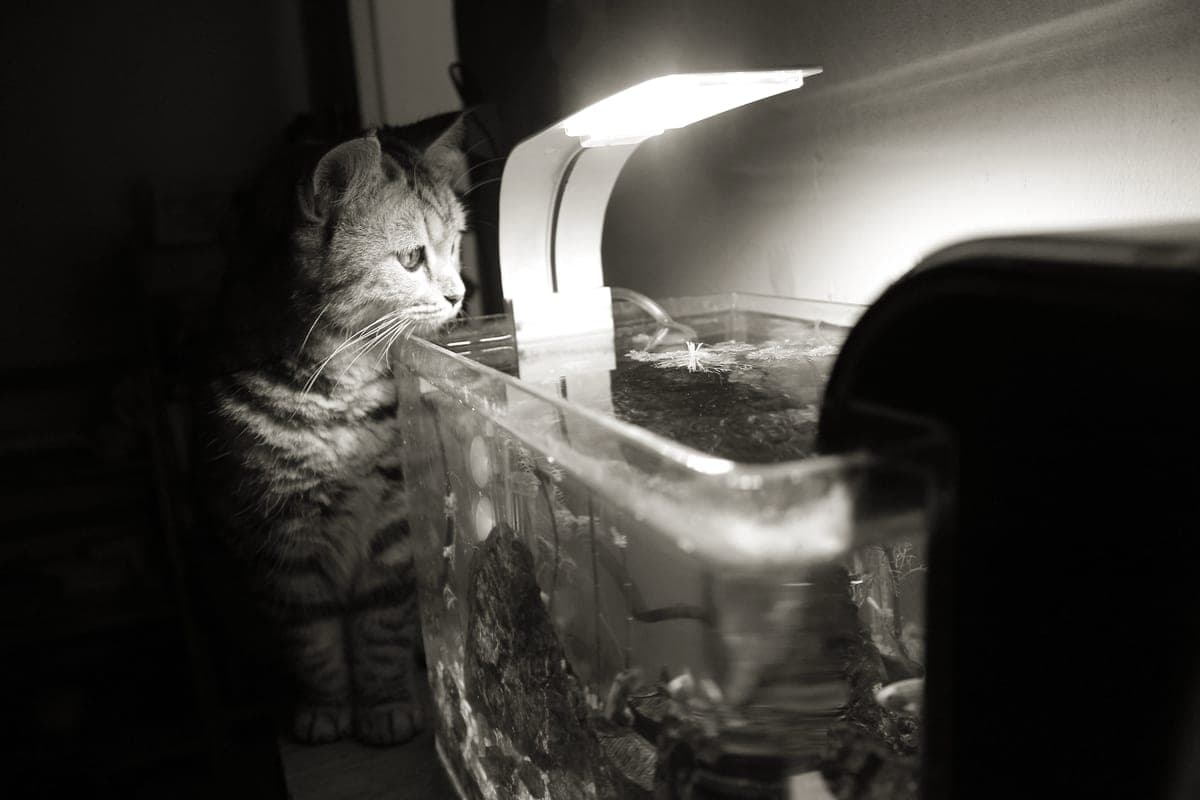
A small desktop aquarium lit warmly from above
Quick picks

The shortlist, ranked

Ranked on published manufacturer specifications and, where the figures exist, on the arithmetic they imply for a tank this size. Tap any row for the full write-up, including who should skip it.

#ProductBest forScorePrice
01A submersible aquarium heater of the type described - a stand-in for the Fluval P10 Submersible Heater, 10W, not a photograph of this modelFluval P10 Submersible Heater, 10WA 3-gallon in a room that stays above about 68FThe right answer7.9Check price on Amazon
02A submersible aquarium heater of the type described - a stand-in for the Fluval P25 Submersible Heater, 25W, not a photograph of this modelFluval P25 Submersible Heater, 25WA 5-gallon betta tank in a normally heated roomFor a cold room8.8Check price on Amazon

Scores are ours and editorial. They are never published as review or rating markup, because we have not tested these products.

Before the heater: is this tank for a betta?

If so, we would rather you spent the heater money on a bigger tank. Three gallons rated is 2.6 gallons of actual water, and that is a buffer so small that temperature and ammonia both swing faster than you can react to either. Our answer on volume is five gallons minimum, and it is not a close call.

A 3-gallon is a genuinely good shrimp or snail tank, though, and those want heating too. So the sizing below stands either way.

The sum

3 US gal rated, less 15% for substrate and fill line, is 2.6 gal of water. A 78F target minus a coldest-room 68F is a 10F lift. 2.6 x 0.35 x 10 = 9.1W required. Nothing is sold at 9.1W, so the answer is the 10W.

Tank (rated)Water after substrateColdest roomWatts requiredHeater to buy
3 US gal2.6 gal74°F3.6W10W
3 US gal2.6 gal72°F5.5W10W
3 US gal2.6 gal70°F7.3W10W
3 US gal2.6 gal68°F9.1W10W
3 US gal2.6 gal66°F10.9W25W
3 US gal2.6 gal64°F12.7W25W *

Three gallons is where oversizing starts to matter

On a 20-gallon tank, putting in twice the heater you need is close to harmless - there is enough water to absorb a stuck thermostat for hours. On 2.6 gallons it is not. A 50W heater failing on in this volume moves the temperature fast enough to matter overnight, and overnight is when it will happen.

So on this page, unusually, we would tell you not to round up aggressively. Take the 10W if your room is above 68°F. Take the 25W if it is not, and accept that the 25W is already double what the arithmetic asks for at 68 - because below 68 you have no smaller option and the alternative is a tank that never reaches temperature.

The cheaper fix, and we mean it

At three gallons the most effective thing you can do about temperature is not a heater at all. Fit a lid, move the tank off an exterior wall and away from a window, and you will typically lift the stable temperature by a couple of degrees for nothing. That is the same lift a heater upgrade would buy you, and it does not add a failure mode.

Fitting a heater in a tank this small

The Fluval P10 is 5.3 inches long. A typical 3-gallon is 10 to 12 inches wide and 9 to 11 tall, so a horizontal heater along the back glass takes up half the width. Plan for that when you scape: put the heater in first, then hide it behind hardscape or a tall plant, rather than trying to retrofit a hiding place afterwards.

What we cannot tell you

Whether any given nano heater’s thermostat is accurate in this volume, which is exactly the question a 3-gallon owner most wants answered. We have not run these heaters. What we do instead is publish the sizing, name the risk, and tell you to buy the thermometer.

The write-ups

Every pick, in full

01 / The right answerA submersible aquarium heater of the type described - a stand-in for the Fluval P10 Submersible Heater, 10W, not a photograph of this model

Fluval

7.9 / 10

Fluval P10 Submersible Heater, 10W

Ten watts, rated to 3 US gallons, 5.3 inches long. It is the smallest heater in this class that publishes a capacity AND a maximum lift, which is the pair of numbers you actually need. In a 3-gallon in a 72-degree room our sum says 5.5W; the P10 clears that with room to spare. In a 64-degree room it does not, and Fluval's own 12-degree note says the same thing.

Check price on Amazon

#ad We hold no verified live price for this product, so we show none. How this site is funded.

Published specifications for the Fluval P10 Submersible Heater, 10W, with the page each figure was read from
SpecificationValueSource
Wattage (120 V / 60 Hz)10WFluval P Series published specifications
Rated aquarium capacityup to 3 US Gal / 10 LFluval P Series published specifications
Dimensions5.3" L x 0.78" W x 0.59" H (13.5 x 2 x 1.5 cm)Fluval P Series published specifications
Maximum lift over room temperature12F / 8C - beyond that Fluval states additional heating capacity is likely necessaryFluval P Series published guidance
Temperature settingPreset - not adjustableFluval P Series published specifications

The sum for this one

Covers a 3-gallon down to about a 68F room, and no further.

3 US gal rated, less 15% for substrate and fill line, is 2.6 gal of water. A 78F target minus a coldest-room 68F is a 10F lift. 2.6 x 0.35 x 10 = 9.1W required. Nothing is sold at 9.1W, so the answer is the 10W.

What it does well

  • Publishes wattage, capacity AND maximum lift - almost nothing else in this class does
  • 5.3 inches hides behind almost any hardscape
  • Fully submersible, so it can lie flat under the substrate line

What it does not

  • Preset, so you cannot dial a degree either way
  • Genuinely underpowered in a cold room
  • No display, so you are buying a separate thermometer regardless

Skip this one if

Your room drops below 68F. At a 3-gallon and a 64F room the arithmetic wants 12.7W and you have 10, which is how a tank sits at 74F all winter.

How it scores, by criterion

Published spec depth9.5
Sizing honesty9.5
Cold-room headroom4.5
Concealability9.0
Control4.0
02 / For a cold roomA submersible aquarium heater of the type described - a stand-in for the Fluval P25 Submersible Heater, 25W, not a photograph of this model

Fluval

8.8 / 10

Fluval P25 Submersible Heater, 25W

The default answer for a 5-gallon betta tank, and the reason the folk rule of thumb happens to land in the right place. Our sum for a 5-gallon in a normal US room - 68F, Aquarium Co-Op's published figure for a typical American house - is 15.1W. Nothing is sold at 15W. The next size up is 25, and that is the P25.

Check price on Amazon

#ad We hold no verified live price for this product, so we show none. How this site is funded.

Published specifications for the Fluval P25 Submersible Heater, 25W, with the page each figure was read from
SpecificationValueSource
Wattage (120 V / 60 Hz)25WFluval P Series published specifications
Rated aquarium capacityup to 6 US Gal / 25 LFluval P Series published specifications
Dimensions5.9" L x 1.1" W x 0.68" H (15 x 3 x 1.75 cm)Fluval P Series published specifications
Maximum lift over room temperature12F / 8C, per Fluval's published guidanceFluval P Series published guidance
Temperature settingPreset - not adjustableFluval P Series published specifications

The sum for this one

The right size for a 5-gallon in a 64-72F room.

5 US gal rated, less 15% for substrate and fill line, is 4.3 gal of water. A 78F target minus a coldest-room 68F is a 10F lift. 4.3 x 0.35 x 10 = 15.1W required. Nothing is sold at 15.1W, so the answer is the 25W.

What it does well

  • The rating pair (25W, 6 gal) is the single most useful published figure in this category
  • Fits a Spec V's rear chamber and most 5-gallon rimless tanks
  • Fully submersible and short enough to lie horizontal

What it does not

  • Preset - no adjustment for illness, heatwaves or a cool spare room
  • Runs out of capacity below about a 64F room in a 5-gallon
  • No thermometer, and you should never trust a heater's own setting alone

Skip this one if

You want to run a degree cooler in summer or warmer for a sick fish. This is preset; buy the adjustable if you want a dial.

How it scores, by criterion

Published spec depth9.5
Sizing honesty9.5
Cold-room headroom7.0
Concealability8.5
Control4.0

How these picks were chosen

Everyone in this category says they tested twenty tanks. We have not tested any, and we say so. What we did instead: read the manuals, compile the published specifications, compute the wattage and the turnover against the tank’s real water volume rather than its shelf label, and show the arithmetic so you can check it.

The full method, including what we refuse to claim.

Questions

Frequently asked

Is a 3-gallon big enough for a betta?

It is bigger than a bowl and smaller than we would recommend. Five gallons is our floor, and the reason is buffer rather than swimming room - 2.6 gallons of water changes chemistry and temperature far faster than 4.3 does. A betta will survive in three; it has a substantially better chance in five.

Can I use a 25W heater in a 3-gallon?

Yes, and in a room below 68°F you have to, because 10W is the next size down and it will not keep up. Be aware you are running roughly double the wattage the arithmetic asks for, and check the thermometer daily rather than weekly.

What about those tiny 7W or 8W preset betta heaters?

Our sum for a 3-gallon at a 68°F room is 9.1W, so a 7 or 8W unit is marginal even in a warm room and inadequate in a cool one. They are also, as a category, sold without a published rated capacity or maximum lift, so there is no manufacturer figure to check that against.

Sources

Where the figures on this page came from

  1. Fluval P Series Submersible Heaters - published ratings and heating-capacity note
  2. Aquarium Co-Op, Betta Fish Care Guide - published temperature and tank-size guidance
Read next