We earn a commission if you buy through the links on this page, at no extra cost to you. It never changes a ranking, and there are products recommended here with no affiliate link behind them at all. Full disclosure.
The list, before the reasoning
A correct betta setup at its budget end is five things. None of them is a kit.
- A plain glass tank, five rated gallons or more. No lid, no light, no filter - just the box. This is the single biggest saving available and it is not a compromise.
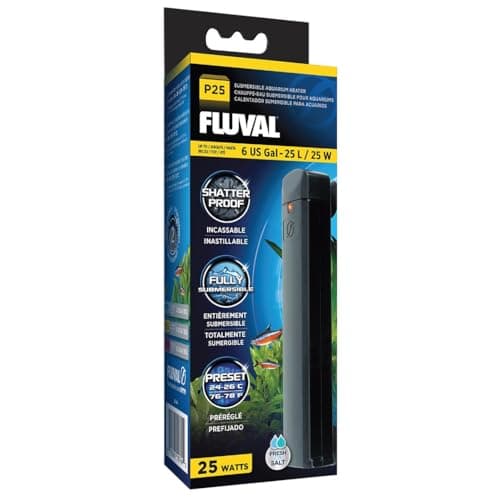
- A 25W heater. Sized by arithmetic, not by the box.
- A sponge filter and an air pump. The cheapest correct filtration there is, and for a long-finned fish arguably the best.
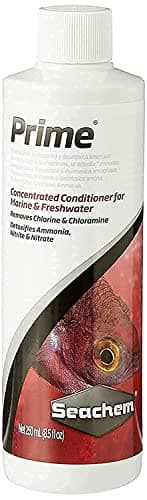
- A dechlorinator. Non-negotiable on municipal water.
- A thermometer. A few dollars, and the only object in the tank taking a measurement.
Everything else - substrate, plants, lighting, decor - is optional, deferrable, or free. We will come back to which.
What we ranked these on
Budget pages go wrong by ranking on price alone, so here is the criterion stack before the picks.
Does it do the job at all? A cheaper thing that does not perform the function is not cheaper, it is a different purchase. This rules out bowls, decorative vases and anything under five gallons immediately.
Cost to run, not just to buy. A cartridge filter is cheap on the shelf and bills you monthly. A sponge filter is cheap on the shelf and never bills you again. Over a year the ordering reverses.
Sized by our own arithmetic. The budget heater still has to satisfy 15.1W at a 68°F room. Saving money by under-sizing is the failure that kills fish.
Published specifications. Same standard as everywhere else on this site. Cheap does not exempt a product from having to be documented.
The tank: buy the box, not the kit
A plain rimmed 10-gallon glass aquarium is the cheapest way to get a correct amount of water, and it is frequently cheaper than a designer 5-gallon kit while holding twice as much. More water is more buffer against every mistake a beginner makes.
It is not one of our picks, and not because we dislike it. We could not reach a manufacturer page publishing dimensions for a plain glass tank in this class, and this site does not link to products it cannot describe. That costs us the commission on the option we think most budget buyers should take, which is the arrangement set out in how this site is funded. The 10-gallon page covers it in more detail.
A rated 10-gallon holds about 8.5 gallons of water; a rated 5-gallon holds 4.3. If the choice is a plain 10 or a decorated 5 at the same money, take the 10 every time.
The heater: the one place not to economize
5 US gal rated, less 15% for substrate and fill line, is 4.3 gal of water. A 78F target minus a coldest-room 68F is a 10F lift. 4.3 x 0.35 x 10 = 15.1W required. Nothing is sold at 15.1W, so the answer is the 25W.
Twenty-five watts is the answer for a 5-gallon and it is already a cheap component. The budget trap here is the unbranded nano heater sold with no published capacity and no maximum lift - a heater you cannot size is a heater you cannot trust, and it fails in exactly the conditions you bought it for.
The Fluval P25 is on this list because Fluval publishes wattage, rated capacity and a maximum lift over ambient. That is three figures where the rest of the shelf publishes one, and it costs a few dollars more than the anonymous alternative. The full sizing method shows how to check any heater against your own room.
The filter: where the real saving lives
A sponge filter and an air pump cost a fraction of a hang-on-back and never need a cartridge. There is no impeller, so it physically cannot shred a fin or injure a shrimp, and it keeps working through a power cut without needing a re-prime.
Our turnover target for a betta is 4 tank volumes an hour with a 6 ceiling, and a sponge filter is the only filtration in this class whose flow you adjust continuously - it is set by an air valve, so you can dial it exactly. 4.3 gal of actual water x 4 turnovers an hour is about 17.2 GPH. Past roughly 25.8 GPH you are baffling the outflow or buying a different filter.
The honest downside is noise. A pump hums and bubbles pop, and on a bedside table that is a genuine consideration - it is the main reason people move to a hang-on-back later. Whether a sponge is genuinely enough works through the four conditions that have to hold.
The three false economies
Skipping the heater. A betta at 68°F is lethargic and stressed permanently, and the vet bill nobody pays arrives as a secondary illness weeks later.
Skipping the dechlorinator. Chlorine kills the filter colony in seconds. A bottle is a few dollars and lasts a nano keeper years.
Buying a tank under five gallons to save money. The equipment costs the same and the fish gets less margin. What actually happens in a bowl is the arithmetic of that decision.
Corners you genuinely can cut
- Lighting. If you are not keeping plants, you do not need an aquarium light. Room light gives the fish a day-night cycle for nothing - the full answer is here.
- Substrate. Bare-bottom is easier to clean and costs nothing. If you want plants, rhizome species tie to hardscape and need no substrate at all.
- Decor. A clean rock and a piece of aquarium-safe wood from a local shop beats molded plastic, usually for less. Avoid anything with sharp edges - a betta’s fins tear on them.
- Plants. Buy one anubias or java fern and divide it. Both propagate free, indefinitely - our nano plant picks explains which divide fastest.
- The bucket. Any hardware-store bucket that has never held soap.
Things that look like savings and are not
A second-hand tank with no seal history. Silicone fails and a failed seam is a flood plus broken glass. Fill any used tank outside, on a surface you do not mind wetting, for 24 hours before it goes anywhere near furniture.
Skipping the test kit. It is the one purchase that tells you whether the tank is safe, and a dead fish costs more than the kit does - in money as well as everything else.
Buying the biggest bottle of everything. At nano doses a small bottle of conditioner lasts years. The large one will expire first. Buy small and buy again.
What the budget version is not allowed to skip
The cycle. It is free, it costs only time, and it is the single biggest determinant of whether the fish lives - weeks of running the tank with an ammonia source and no fish, confirmed by a test kit rather than by the calendar. The fishless cycle is the cheapest thing on this entire page and the one most often skipped.
What we cannot tell you
What any of this costs today. Prices move, and this site shows a live price on the button or no price at all rather than printing a number that might be stale by the time you read it. What we can tell you is the shape of the decision: buy the plain tank, size the heater by arithmetic, take the sponge filter, and spend the difference on more gallons rather than on a nicer box.