We earn a commission if you buy through the links on this page, at no extra cost to you. It never changes a ranking, and there are products recommended here with no affiliate link behind them at all. Full disclosure.
The short answer
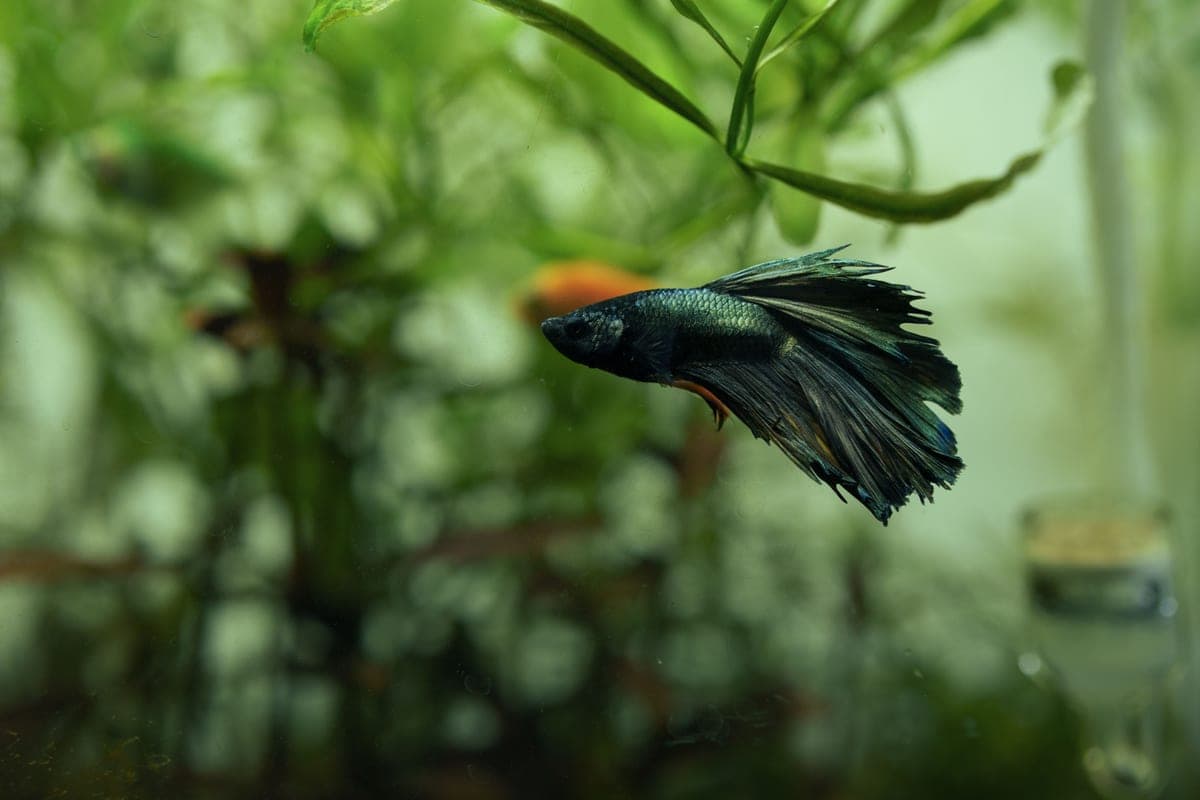
The behavior is real. Bettas do rest on surfaces partway up the water column, and they do it near the top, where the air is. Zoo Med publishes exactly this as the purpose of its Betta Bed: a resting place near the surface, as they do in nature. Nobody needs to be talked into this part.
Our first recommendation is a plant, not a hammock. An anubias nana petite tied to wood or a rock gives a betta the same broad leaf to lie on, at a similar price, while also consuming nitrate, hosting biofilm, tolerating the light any nano fixture produces and never letting go of a suction cup.
Buy the hammock if a live plant is genuinely not happening - a tank with no substrate, a child’s tank that gets rearranged, a hospital setup. It is inert, it costs almost nothing, and the fish will use it.
How we judged this
- 01
Does it deliver the behavior?
A horizontal surface, broad enough for the fish, positioned in the upper third of the water column. Both a leaf hammock and a broad-leaf plant do this; that is why they are on the same page.
- 02
What does it do to fins?
A long-finned betta drags its fins across whatever it rests on, all day, for years. Edge finish is the specification that matters, and it is the one nobody publishes. We treat that absence as a mark against the plastic and a point for the plant.
- 03
What else does it do?
A plant consumes nitrate, grows biofilm that shrimp and snails graze, and improves as it matures. A plastic leaf does the one job and then stops. At the same price, that is the whole argument.
- 04
Will it stay where it is put?
Suction cups in warm water release. A rhizome plant tied to hardscape does not. This is a small thing that becomes a recurring irritation.
The fin question, and the figure nobody publishes
The standard warning about plastic aquarium decor is torn fins, and it is a fair one in general - injection-molded plastic has seams, and seams can be sharp. The honest state of the evidence here: Zoo Med publishes the dimensions, the material and the mounting method, and publishes nothing about edge finish or seam treatment. We looked for it.
That does not make the Betta Bed dangerous; it is a thin, flexible leaf rather than a rigid ornament, which is the design least likely to cause the problem. What it means is that we cannot tell you it is safe on the strength of anything the maker has printed, so we record the absence and let it count against the product. That is the same standard we apply to a filter that will not publish a flow rate.
The practical test costs nothing: run a knee-high stocking or a fine nylon over the edges before it goes in the tank. Anything that snags the nylon will snag a fin. This applies to every piece of plastic or silk decor you own, not just this one.
Why a broad leaf plant is the better version
| Anubias nana petite | Zoo Med Betta Bed |
|---|
| Provides a resting surface | Yes, broad and slightly flexible | Yes, that is the whole design |
| Position in the column | Wherever you attach the wood or rock | Wherever the suction cup holds |
| Consumes nitrate | Yes | No |
| Hosts biofilm for shrimp and snails | Yes | Negligibly |
| Light needed | Low - any nano fixture clears it | None |
| Stays put | Yes, once tied to hardscape | Until the suction cup warms up |
| Edge finish published | Not applicable - it is a leaf | Not published |
| Improves over time | Yes - it grows more leaves | No |
The one honest advantage the plastic leaf holds: it works on day one at the exact height you choose, and an anubias has to be attached, settled and grown into the job. Our plant guide covers the rhizome rule that kills most first attempts - bury the rhizome and the plant dies - so if you go the plant route, read that first.
Where to put either one
Upper third of the water column, and not directly under the filter outflow. A betta resting on a leaf in a current is not resting. If you are unsure where the calm water in your tank is, feed a pellet and watch where it drifts.
Two or three resting spots at different heights is better than one perfect one. Broad-leaf plants, a piece of wood angled upward and floating plants at the surface between them give a fish somewhere to be at every level - the floating layer is its own decision and it pairs well with this.
A hammock is not a diagnosis
If a betta has suddenly started resting constantly at the surface, adding a leaf for it to lie on does not address that. There are four measurable causes worth checking - temperature, ammonia and nitrite, flow, and whether the filter has stopped - before you conclude the fish simply wanted furniture.
The silk alternative
Silk plants sit between plastic and live: softer edges, no seams, no growth. They are a reasonable choice, and the reason this page originally listed none was that every listing we could find was an unbranded third-party seller with no published material specification - and a product whose entire selling point is that the material is gentle needs a published material.
We have since found one line that does publish: Marina Naturals, from Hagen, with part numbers and published size bands. Fake plants in a betta tank sets out what we found, what is still not published by anyone in that category - edge finish, seam treatment, fiber content - and the nylon test that remains the only real evidence either way. If you buy silk, buy it somewhere you can handle it first, and run that test.