The best floating plants for a betta tank
The one plant category chosen for where the fish actually spends its day - and the one where we cannot give you a verified listing, which the page says up front.
We earn a commission if you buy through the links on this page, at no extra cost to you. It never changes a ranking, and there are products recommended here with no affiliate link behind them at all. Full disclosure.
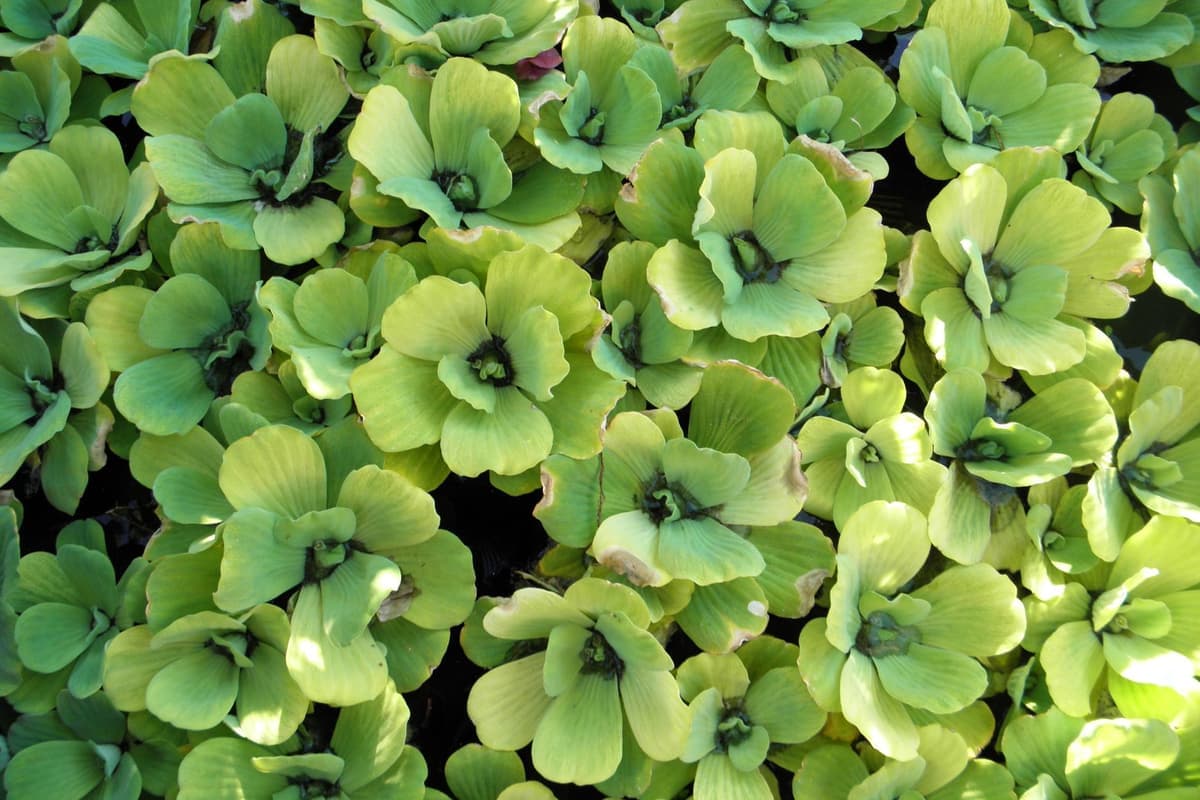
Why floating plants suit a betta specifically
Almost every plant recommendation is about the substrate or the hardscape. A betta does not live there. It patrols mid-water and the surface, it takes atmospheric air from the surface through its labyrinth organ, and it builds bubble nests against something at the surface.
Floating plants are the only category positioned where the fish actually is. They do four things at once that no rooted plant does:
- Overhead cover. A betta in an open, brightly lit tank with no surface shade is a fish with nowhere to feel unobserved. Cover is the single cheapest behavioral improvement available.
- Something to nest against. Bubble nests need an anchor. A floating plant is the natural one.
- Fast nutrient export. Floating plants sit with their leaves in air and their roots in water, which means no CO2 limitation. They grow far faster than the rhizome plants on our nano list, and fast growth is what actually removes nitrate.
- Shade for shade-preferring plants. Anubias and java fern are published at 10-20 PAR and collect algae under a bright fixture. A floating layer above them is the cheapest dimmer there is.
The honest sourcing problem, up front
This page does not link a specific floating plant, and that is deliberate. Every floating plant on Amazon is a third-party seller listing - a handful of leaves in a bag, from a shop whose stock and quality we cannot verify and whose listing may be gone next month. The plants we do list elsewhere on this site all carry published care data from a seller that publishes it; the floating species do not.
So this is a page about shapes and trade-offs, with the buying advice being: get them from a local shop or a plant-focused seller where you can see what arrives, and expect to pay very little. A single portion multiplies into a full surface within weeks, which is the whole problem with them and also the reason nobody should pay much.
The products below are the equipment the decision actually touches - the light the floaters will be shading, the moss they pair with, and the supplement a fast-growing plant will use.
The three shapes, and what each costs you
Large-leaf rosettes - frogbit and water lettuce are the common examples. Round leaves an inch or more across, with long trailing roots. Best cover per plant, easiest to remove by hand, and the trailing roots are the part shrimp graze and fry hide in. The cost is depth: those roots hang several inches into a tank that may only be ten inches tall, and in a nano they will reach the substrate.
Small-leaf floaters - salvinia and similar. Smaller leaves, shorter roots, spreads into a mat. Better suited to a shallow nano than the rosettes, and easier to thin because you can skim a section off. Less dramatic as cover.
Duckweed. Tiny, spreads explosively, and is effectively impossible to remove once established - it survives in the filter, on your hands, in the bucket. Some keepers use it deliberately for nutrient export. We would not put it in a tank we intended to keep looking tidy, and we would be careful about it hitching a ride in with other plants.
The light cost nobody mentions
A floating layer is a shade cloth. That is the point when you are protecting anubias, and it is a problem when you have rooted plants below that need light of their own. Dwarf sagittaria is published at 20-35 PAR - medium light - and a thick mat of frogbit above it will push it under that. If you run both, keep the floaters thinned to roughly half the surface and accept it as a weekly job. What a nano fixture actually delivers covers why you cannot measure this and have to judge it by plant response.
The two practical problems, and their fixes
Filter flow pushes them into a corner. Floating plants pile up against the far glass, then get pulled under the outflow and rot. The standard fix is a corral: a length of airline tubing joined into a ring, floating on the surface, keeping the plants in one area. It costs almost nothing and it is the difference between a deliberate-looking tank and a mess.
Wet leaves melt. Most floaters need their upper surfaces dry. Condensation dripping off a tight lid, or spray from a hang-on-back return, will rot them. A lid with a gap, or a baffled outflow, solves it - the same baffle a betta wants anyway.
Note the tension there: this site recommends a lid on nano tanks because evaporation is the largest heat loss in a small open tank. Floating plants and a tight lid work against each other. A lid with a small gap, or accepting slightly higher evaporation, is the compromise - and it is worth knowing before you buy rather than after.
What floating plants do not fix
They are not a filter. Faster growth means more nutrient export than anubias manages, but a nano tank full of floaters is still a tank that needs water changes on schedule. What actually lowers nitrate puts plants in their proper place in that list.
They are not a substitute for a light. If the tank has no fixture, floaters will survive on room light and rooted plants below will not.
They will not stop a betta being stressed by flow. Surface cover helps a fish that feels exposed. It does nothing for a fish being pushed around by a pump.
How many to start with
Far fewer than you think. A handful of rosettes covers a 4.3-gallon surface within a few weeks in decent light, and the failure mode of this category is always too much rather than too little.
Plan to thin them weekly, and plan where the surplus goes - a bag for a local shop, a friend’s tank, or the bin. Floating plants are the one purchase in this hobby where the ongoing work is disposal.
What we cannot tell you
Published PAR figures or care data for any floating species - unlike the rooted and rhizome plants on this site, no seller we could find publishes them for floaters. We also cannot verify any specific listing as currently purchasable and correctly identified, which is why this page recommends a category and a buying route rather than a product. That is the standard, and it costs us the commission on this page.
What we would buy for this
Chosen from the same registry as our roundups, on published specifications and the arithmetic they imply - not on testing we have not done.
Fluval C.O.B. Nano LED, 6.5W
Six and a half watts, no app, no schedule, no color channels. For a low-light betta tank growing anubias and java fern that is not a compromise, it is the correct specification - and it costs a fraction of the programmable option. Put it on a mechanical outlet timer and you have a photoperiod.
Best for: A low-light betta tank with anubias, java fern or crypts
Skip it if: You are growing carpeting plants or anything Aquarium Co-Op rates above low light. Six and a half watts will not do it.
Java Moss
The only plant on this site that solves a problem nothing else does: it gives baby shrimp and fry somewhere to hide, and it does it in a tank with no substrate, no CO2 and a cheap light. Aquarium Co-Op publishes low light at 10-20 PAR, no CO2, easy, and sells it attached to a flexible wire mesh grid measuring 2.75 by 2.75 inches - which is a genuinely useful figure, because it tells you how much tank floor one portion covers.
Best for: A shrimp tank, a fry tank, or hiding hardscape you dislike
Skip it if: You want a tidy scape. Moss traps every scrap of uneaten food and detritus that passes it, and getting that out means pulling the moss.
Seachem Flourish
A comprehensive trace-element supplement, and the label is doing more work than most buyers notice. Seachem publishes that it supplies calcium, magnesium, iron and other trace elements - and states outright that it 'does not contain significant levels of nitrogen or phosphorus'. So it is not an all-in-one fertilizer, whatever the shelf position implies. In a low-tech nano with fish in it, the nitrogen and phosphorus arrive from feeding anyway, which is exactly why this is the right bottle for this site's reader and the wrong one for a high-tech tank.
Best for: A low-tech planted nano where the fish already supply the nitrogen
Skip it if: You are running a heavily planted, lightly stocked tank with CO2. That tank needs macros, and this bottle deliberately does not carry them.
Frequently asked
Do bettas like floating plants?
They suit a betta better than any other plant category, structurally: a betta lives at the surface, takes air from it, and builds bubble nests against something at it. We will not claim a preference we have not observed, but the cover, the nest anchor and the shade are all real and all at the surface.
What is the best floating plant for a small tank?
A small-leaf floater rather than a large rosette. Frogbit and water lettuce trail roots several inches down, which is most of the depth of a nano tank; smaller-leaved floaters sit shallower and are easier to thin.
Will floating plants block too much light?
They can. That is helpful above anubias and java fern, which are published at 10-20 PAR, and a problem above dwarf sagittaria at 20-35 PAR. Keep the mat to roughly half the surface if you have rooted plants below.
How do I stop floating plants getting sucked into the filter?
Corral them with a ring of airline tubing floating on the surface, and baffle the filter outflow so it is not driving a current across the top. Both cost almost nothing.
Do floating plants need fertilizer?
Less than rooted plants, because they have no CO2 limitation and grow fast on what a stocked tank already produces. If they pale, a trace supplement at the published dose is the first thing to try, not a macro fertilizer.
Why does this page not link to a specific plant?
Because every floating plant listing we found is a third-party seller we cannot verify, and none publishes care data. This site does not link products it cannot describe. Buy them locally or from a plant-focused seller where you can see what arrives.
Where the figures on this page came from
- Aquarium Co-Op, Anubias Nana Petite - published light and CO2 requirements
- Aquarium Co-Op, Java Fern - published care requirements
- Fluval Stratum - published product page and substrate volume formula
- Seachem Flourite Black Sand - published mineral analysis
- Aquarium Co-Op, Java Moss - published care requirements
- Aquarium Co-Op, Dwarf Sagittaria - published care requirements