How to aquascape a 5-gallon tank
A 5-gallon is usually six or seven inches front to back. That is a shallow relief, not a landscape, and scapes that ignore it read as a wall.
We earn a commission if you buy through the links on this page, at no extra cost to you. It never changes a ranking, and there are products recommended here with no affiliate link behind them at all. Full disclosure.
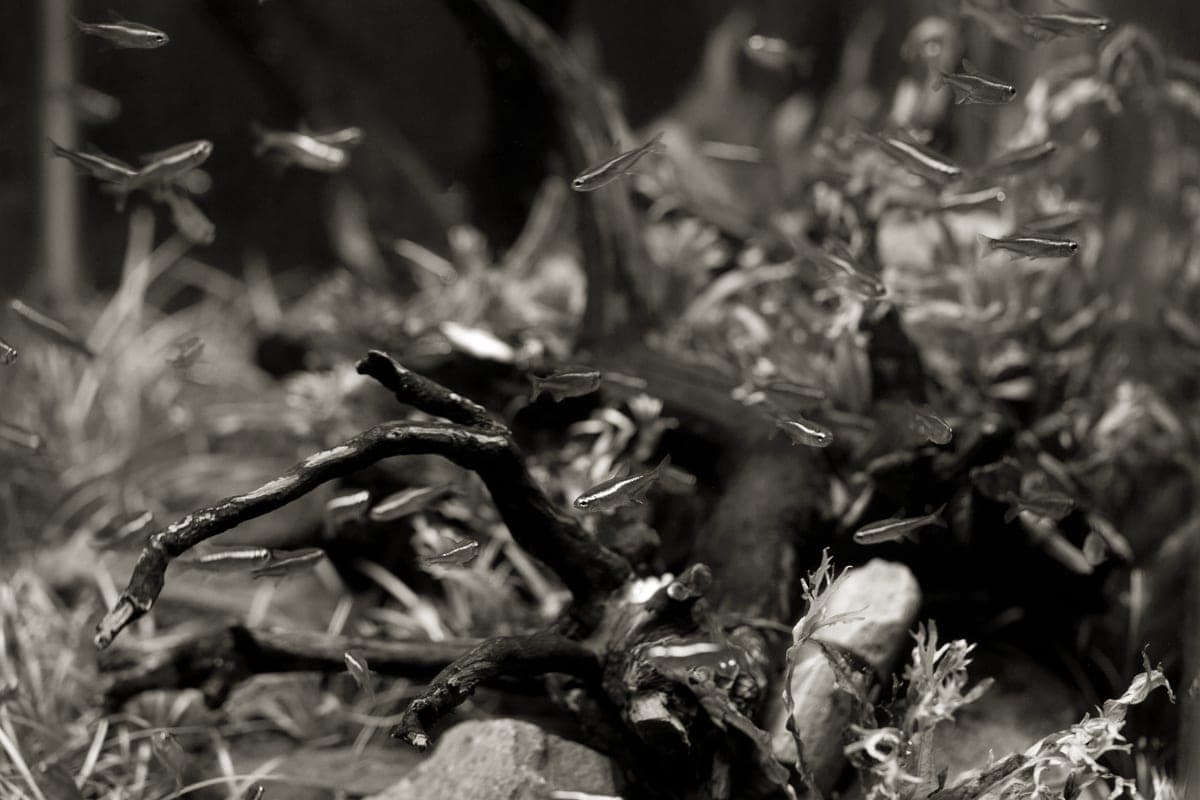
Work with the shape you have
A Fluval Spec V is 19.5 inches long and 6.5 deep. Most 5-gallon tanks are similar: long and shallow. That is a good shape for a betta and an awkward one for aquascaping, because most scaping convention assumes depth you do not have.
The consequence is direct. A hardscape arrangement designed to be viewed into - foreground, midground, background - has six inches to do it in and reads as a wall. What works instead is a shallow relief: one strong focal element, a slope, and planting that varies in height rather than in distance.
The substrate slope
Substrate is your only real depth tool. Build it up at the back and thin it at the front - an inch at the front rising to two at the back. The eye reads the rising line as distance.
Fluval publishes the quantity formula, so this is computable rather than guessed: at an average of 1.5 inches across a 19.5 x 6.5 footprint you need about 3.1 kg, roughly 6.8 lb. The smallest bag is 4.4 lb, so one bag is close and two gives you room to shape.
Keep the maximum under about two and a half inches even at the back - deeper beds in a small tank create anaerobic pockets. Substrate choice.
One focal point, not three
The commonest nano scaping error is too many elements. In 19.5 inches of length you have room for one piece of wood or one small stone group that reads as the subject, plus supporting planting. Three competing elements in a nano tank produce visual noise, not complexity.
Place it off-center - roughly a third of the way along - rather than in the middle. A centered focal point in a long shallow tank splits the composition into two equal halves and looks static.
Height is your depth substitute
You cannot build distance, so build elevation. A piece of wood that rises from the substrate toward the surface gives the tank a vertical axis, and it does the functional job as well: it breaks the sight line across the tank, which is what makes a betta tank calmer.
Attach java fern at mid-height and anubias lower. Aquarium Co-Op publishes both as low light with no CO2 requirement, so they need nothing beyond your existing kit, and both attach to hardscape rather than rooting - which in a tank where substrate is precious volume is a considerable practical advantage.
Scape for the fish as well as the photograph
A betta needs: one broad leaf near the surface to sleep on, a route to the surface that is not blocked by floating plants, and somewhere to be out of the filter flow. Those three requirements cost nothing to design in and are almost always omitted from scapes built purely to be looked at.
Also leave yourself a clear channel to the substrate for the siphon. A scape you cannot clean under becomes a detritus trap within a month.
The order of work
- 01
Dry-scape first, and take a photograph
Substrate and hardscape only, no water. Move it around for as long as you need. Photograph it - a scape often reads completely differently in a photo than in the room, and this is free feedback.
- 02
Attach the rhizome plants before flooding
Tie or glue anubias and java fern to the wood while it is dry and out of the tank. Superglue gel needs a dry surface, and doing it underwater is needlessly difficult. Never bury the rhizome.
- 03
Fill onto a plate
Lay a saucer or a plastic bag on the substrate and pour onto that. Filling directly onto substrate excavates the slope you just built and clouds the tank for days.
- 04
Plant the rooted species with the tank half full
Crypts and anything rooted go in with a few inches of water in the tank - enough that the substrate is wet and holds them, not so much that you are reaching down through a full tank. Tweezers help.
- 05
Add floaters last, and expect them to move
Floating plants get pushed around by surface flow and will pile up at one end. Some people fit a floating ring; others accept it. Either way, add them after the flow is set so you can see where they end up.
Things that look good and are not
- Sharp ornaments and hard plastic plants. A betta’s fins tear on them. Silk is fine; hard plastic is not.
- Anything with a narrow opening. Ornaments with holes a fish can enter and not exit account for a real share of avoidable betta deaths. If you can see a gap it could wedge into, it will.
- Untreated wood from outside. It can carry pesticide residue and will tint the water heavily. Buy aquarium wood, or boil and soak collected wood for a long time and accept the tannins.
- Painted gravel and dyed ornaments. Coatings degrade.
What we cannot tell you
Whether a particular scape will look good, which is taste, or how a specific piece of wood will behave - some sink immediately, some float for a month, some tint the water for a year. Those are properties of the individual piece rather than of a category, and nobody can tell you in advance.
What we would buy for this
Chosen from the same registry as our roundups, on published specifications and the arithmetic they imply - not on testing we have not done.
Fluval Stratum
Volcanic soil from the foothills of Mount Aso, and the substrate we would put in a planted nano. It is a soil, not a gravel: it holds nutrients at the root, it supports a neutral to slightly acidic pH, and Fluval publishes the formula for how much of it you need, which almost nobody else does. It is also soft, light, and it will cloud if you dig in it.
Skip it if: You rearrange your scape often. Stratum breaks down under repeated disturbance and turns into a fine silt that clogs foam.
Anubias Nana Petite
The single most useful plant in a betta tank. It attaches to hardscape rather than rooting, it wants low light and no CO2, and its leaves are stiff enough to hold a sleeping betta. Aquarium Co-Op publishes the numbers that matter: 10-20 PAR, no CO2 requirement, attach to rocks or wood.
Skip it if: You intend to bury the rhizome. Anubias rots when the rhizome is planted, and this is the most common way people kill it.
Java Fern
The other rhizome plant, and the one that gives a small tank height without needing a substrate. Same rules as anubias: tie it to wood, never bury the rhizome, low light, no CO2. It grows faster than anubias, which makes it the better choice if you want the plants doing real nitrate work.
Skip it if: You want a tidy plant. Java fern throws plantlets off its own leaves and will slowly colonize everything you tie it near.
Frequently asked
How much substrate for a 5-gallon aquascape?
For a slope averaging about 1.5 inches over a 19.5 x 6.5 footprint, Fluval’s published formula gives 3.1 kg, about 6.8 lb. One 4.4 lb bag gets close; two gives you room to shape properly.
Can you aquascape a 5-gallon properly?
Yes, provided you accept it as a shallow relief rather than a landscape. One focal element placed off-center, a substrate slope, and planting that varies in height. Scapes that try to build front-to-back depth in six inches read as a wall.
Should the hardscape go in before or after the water?
Before, always. Dry-scape until you are happy, photograph it, then flood. You will move it several times and doing that in a full tank is miserable.
Do I need CO2 to aquascape a nano tank?
Not for the style described here. Rhizome plants, crypts and mosses are published as needing none. CO2 is for carpets and demanding stem plants, which is a different build and a different budget.