Is an aquarium heater controller worth it?
It is the only thing that limits a heater which fails on - the failure mode that actually kills fish in a small tank. It is also not the precision upgrade people assume.
We earn a commission if you buy through the links on this page, at no extra cost to you. It never changes a ranking, and there are products recommended here with no affiliate link behind them at all. Full disclosure.
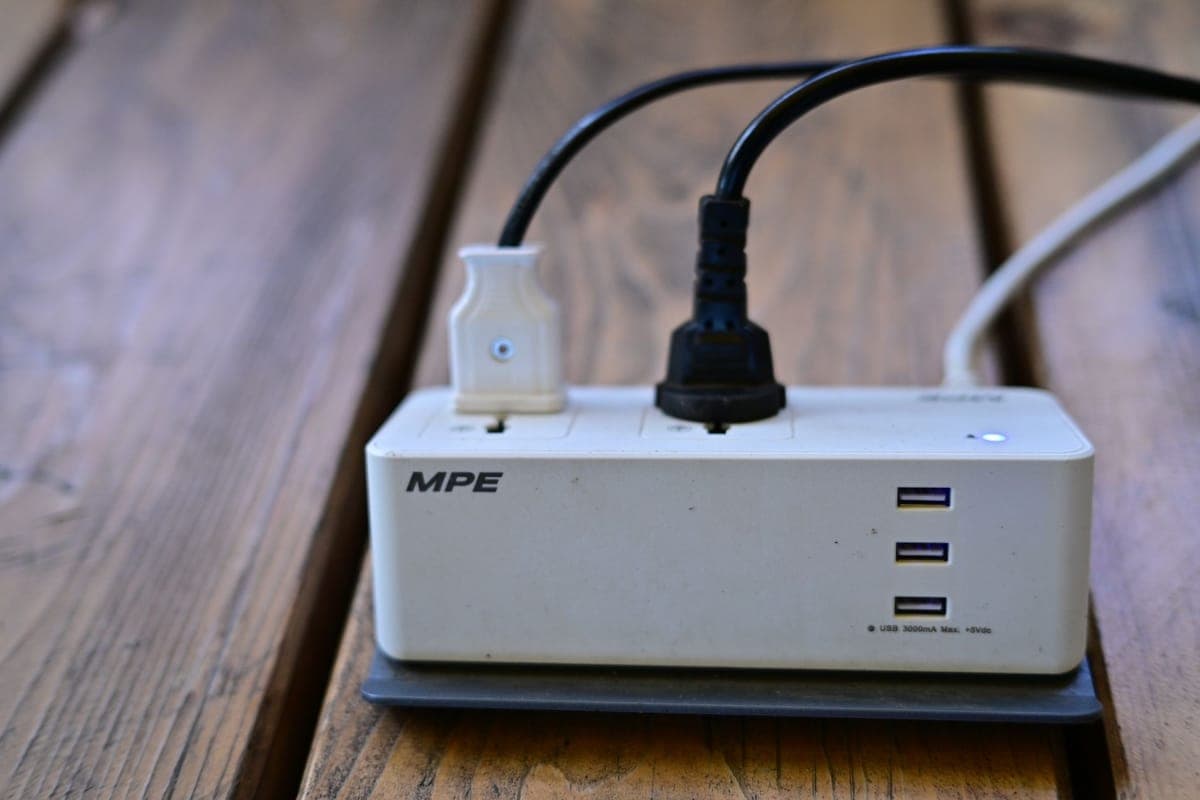
What a controller actually is
A temperature controller is a box that sits between the wall socket and the heater, with its own probe in the tank. You set the target on the controller, set the heater a couple of degrees higher, and the controller decides when power reaches the heater at all.
The heater’s internal thermostat becomes a backstop rather than the primary control. That is the entire product, and it addresses exactly one failure - the heater whose thermostat sticks closed and keeps heating.
That failure is the one this site warns about on every heater page. Thermostats fail closed far more often than open, and in 4.3 gallons of water a stuck heater moves the temperature fast enough to matter overnight - which is when it will happen.
The published figure that surprises people
Inkbird publishes the ITC-308S at a control accuracy of plus or minus 1°C. EHEIM publishes its thermocontrol heaters at plus or minus 0.5°C.
Read that twice, because it inverts the usual sales pitch: on the published numbers, the controller is less precise than the heater it would be supervising. You are not buying tighter temperature control. You are buying:
- A second, independent thermostat. Two devices must fail simultaneously for the tank to cook, rather than one.
- An alarm. Inkbird publishes high and low temperature alarms plus an over-temperature and sensor-fault alarm. That is the part that wakes you up, and no heater has it.
- A reading you can calibrate. Inkbird publishes temperature calibration, so the display can be trued against a reference thermometer.
Independence and an alarm are the value. Precision is not.
What it cannot do
It cannot fix a heater that fails off. If the element dies, the controller calls for heat that never arrives. The low-temperature alarm will tell you - which is genuinely useful - but the tank still goes cold.
It does not replace a thermometer. A controller reports what its own probe reads. A separate glass thermometer at the far end of the tank is still the only independent measurement, and it is what you calibrate the controller against.
It does not make an undersized heater adequate. The wattage still has to satisfy the arithmetic. 10 US gal rated, less 15% for substrate and fill line, is 8.5 gal of water. A 78F target minus a coldest-room 68F is a 10F lift. 8.5 x 0.35 x 10 = 29.7W required. Nothing is sold at 29.7W, so the answer is the 50W. The sizing method is unchanged by adding a controller.
Fit the cheaper protections first
A controller costs about what the heater cost. Before spending that, there are three things that cost nothing or nearly nothing and address the same risk.
1. Do not oversize the heater. This is the single biggest lever and it is free. A stuck 25W heater in a 5-gallon is a slower emergency than a stuck 50W. Buy the wattage the sum asks for, round up once, and stop.
2. Put a thermometer where you will see it. Far end of the tank from the heater, read whenever you feed. That habit catches a stuck thermostat inside a day, and a day is usually survivable in anything above a few gallons.
3. Split the load, if the tank is big enough. From about ten gallons, two heaters at half the wattage mean a stuck thermostat has half the power to work with - the 20-gallon page works through that arithmetic. This achieves much of what a controller achieves, for the price of a second cheap heater.
When we would actually buy one
A tank left unattended for days at a time. A holiday home, an office tank over a long weekend, a second tank you do not look at daily. The alarm is worthless if nobody is there, but the independent cutoff is not.
A tank whose contents are hard to replace. An established shrimp colony took a year to build and dies to one hot night.
A room that swings hard. A conservatory, a garage, a room with a radiator under the tank. A controller holding a set point against a moving ambient does real work there.
Where we would not: a 5-gallon with a correctly sized preset heater, a thermometer you read daily, and someone home every day. That is already two independent layers, and the controller costs as much again as the heater.
How to set one up so it helps
The wiring is trivial; the settings are where people get it wrong.
Set the heater above the controller. If the controller targets 78°F, set the heater to 80 or higher. The point is that the controller is the thing switching - a heater set below the controller’s target will cut out on its own and the controller never acts, which leaves you exactly where you started with an extra box.
Put the probe away from the heater. Same rule as a thermometer: a probe next to the element reads the element. Opposite end, mid-water. The published probe lead is 2 m, so length is not the constraint.
Calibrate against a real thermometer. Inkbird publishes calibration as a feature. Use it once, against a glass thermometer, when the tank has been stable for a day.
Set the alarms narrow enough to be useful. An alarm set five degrees either side of target will not trigger until the tank is already in trouble. A couple of degrees is the point of it.
Mind the cords. You have now added a box and a probe lead to a tank that already had several cables. A drip loop on every cord is not optional, and the controller itself should sit above the water line.
Controller versus simply buying a better heater
It is a fair question, and the honest answer is that they address different things.
A better heater buys you a published accuracy figure and, in EHEIM’s case, a published dry-run shut-off. What it does not buy you is independence: it is still one thermostat, and the failure being guarded against is that thermostat failing.
A controller buys you independence and an alarm at coarser precision. For a fish whose acceptable range is 76 to 82°F, coarser precision is not the binding constraint - the fish does not notice half a degree, and it very much notices eighty-eight.
If the budget only covers one, buy the correctly sized heater first. It is the thing that has to work. The controller is what limits the damage when it does not.
What we cannot tell you
Whether any given controller relay holds up over years, how loud its alarm actually is, or how far its probe drifts between calibrations. Those are ownership questions and we have not owned one - we would rather say so than write a confident paragraph about reliability we have not observed. What we can tell you is what Inkbird publishes, what it structurally can and cannot protect against, and what the cheaper alternatives are.
What we would buy for this
Chosen from the same registry as our roundups, on published specifications and the arithmetic they imply - not on testing we have not done.
Inkbird ITC-308S Aquarium Temperature Controller
A probe in the tank and a relay on the socket, so the heater's own thermostat stops being the only thing standing between your fish and a stuck-on element. Inkbird publishes the figures: -50 to 99C range, plus or minus 1C accuracy, a 10A maximum load, a 2 m NTC probe, calibration and high/low alarms. Read that accuracy figure carefully - at plus or minus 1C it is LESS precise than the EHEIM heater it would be supervising. You are not buying precision. You are buying a second, independent thermostat and an alarm.
Best for: A tank you cannot afford to lose - or any tank where a stuck heater would not be noticed for a day
Skip it if: The tank is a 5-gallon with a correctly sized preset heater and you check the thermometer daily. That is already two layers, and this costs about what the heater did.
EHEIM Jager Aquarium Thermostat Heater, 50W
Sold in the US as the Jager and in EHEIM's own catalog as the thermocontrol 50, and it is the only adjustable heater in this size class we found that publishes a control accuracy. EHEIM states plus or minus 0.5C, a 25 L recommended volume with a 60 L ceiling, a 243 mm body and an automatic dry-run cutoff. That is more of the specification than anyone else in the nano class prints, and it is why this outranks the other adjustables here despite being the longest heater on the page.
Best for: A 10-gallon in a room that swings, where you actually want to change the set point
Skip it if: The tank is a short 5-gallon. At 243 mm the body is most of the water column, and EHEIM's own recommended volume starts at 25 L.
Fluval P25 Submersible Heater, 25W
The default answer for a 5-gallon betta tank, and the reason the folk rule of thumb happens to land in the right place. Our sum for a 5-gallon in a normal US room - 68F, Aquarium Co-Op's published figure for a typical American house - is 15.1W. Nothing is sold at 15W. The next size up is 25, and that is the P25.
Best for: A 5-gallon betta tank in a normally heated room
Skip it if: You want to run a degree cooler in summer or warmer for a sick fish. This is preset; buy the adjustable if you want a dial.
Frequently asked
Is an aquarium temperature controller worth it?
For a tank left unattended for days, a hard-to-replace livestock collection, or a room whose temperature swings - yes. For a 5-gallon with a correctly sized preset heater and someone reading a thermometer daily, it costs about as much as the heater and duplicates protection you already have.
Does a controller make the temperature more accurate?
Usually not. Inkbird publishes plus or minus 1°C for the ITC-308S; EHEIM publishes plus or minus 0.5°C for its heaters. You are buying an independent second thermostat and an alarm, not tighter control.
What temperature should I set the heater to with a controller?
Two or more degrees above the controller’s target, so the controller is the device doing the switching. If the heater is set at or below the target it cuts out on its own and the controller never acts.
Will a controller stop my heater cooking the tank?
That is the one thing it is for - it cuts power when its own probe reaches the set point, regardless of what the heater’s thermostat is doing. It cannot help with a heater that fails off, though the low-temperature alarm will tell you it happened.
Do I still need a thermometer?
Yes. The controller reports its own probe. An independent glass thermometer at the far end of the tank is what you calibrate it against and what tells you if the probe has drifted.
Is there a cheaper way to get the same protection?
Partly. Not oversizing the heater, reading a thermometer daily, and - from about ten gallons up - splitting the load across two smaller heaters each achieve some of it. None of them gives you an alarm.
Where the figures on this page came from
- Fluval P Series Submersible Heaters - published ratings and heating-capacity note
- Aquarium Co-Op, Betta Fish Care Guide - published temperature and tank-size guidance
- Inkbird ITC-308S aquarium temperature controller - published specifications
- EHEIM thermocontrol 50 - published technical data (the heater sold in the US as the Jager 50W)