How long do betta fish live?
Three to five years from hatching. Shop fish are typically six to twelve months old already, so two to four years in your tank is the realistic expectation.
We earn a commission if you buy through the links on this page, at no extra cost to you. It never changes a ranking, and there are products recommended here with no affiliate link behind them at all. Full disclosure.
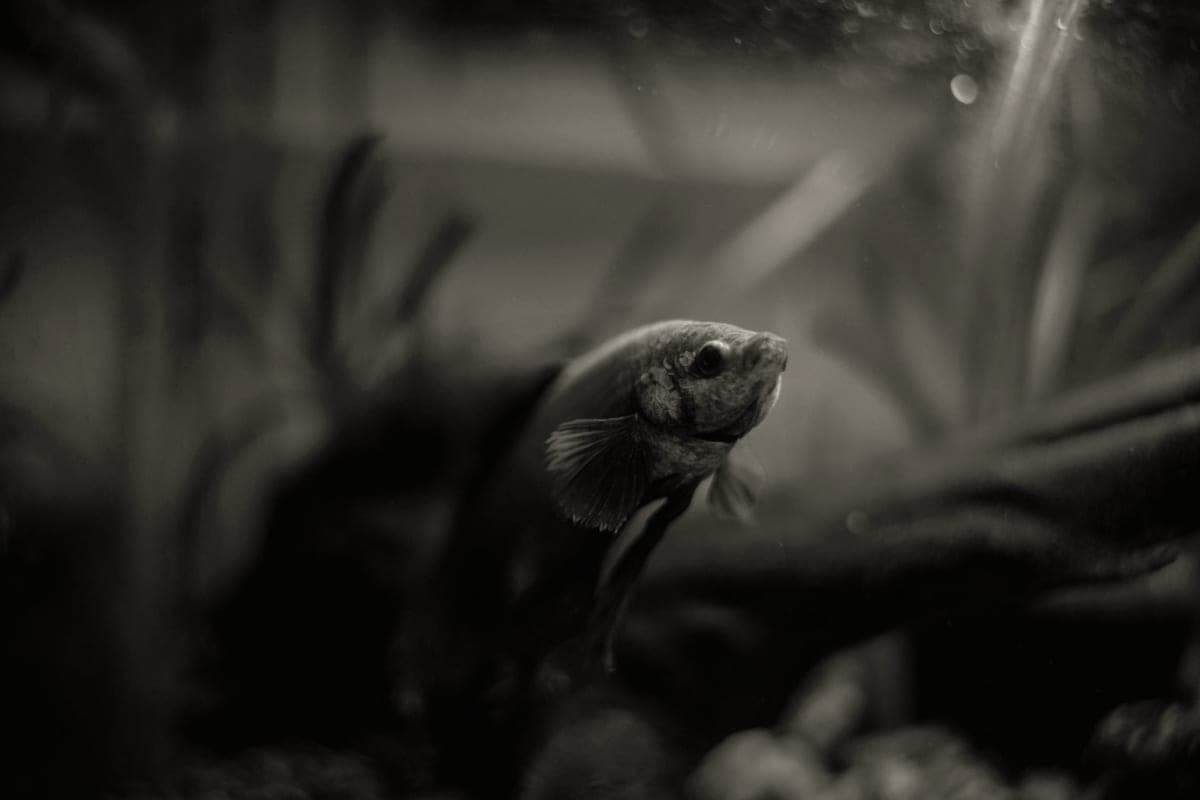
The number, and the part everybody omits
The figure generally published is three to five years from hatching. The part that is usually left out is that you do not buy a newly hatched fish.
Bettas are typically sold as adults - fully colored and fully finned, which for males is around six months and often closer to a year. So the realistic expectation for the fish you take home is two to four years, not three to five.
That arithmetic matters, because it is why a betta dying at eighteen months looks normal to somebody who read “three to five years” and did not adjust for the fish’s age at purchase. It is not normal. It is a fish that lost somewhere between one and three years.
The four things that cost years
In our reading of what actually goes wrong in nano tanks, in rough order of impact:
1. Chronic cold. Aquarium Co-Op publishes that bettas prefer around 80°F and that US rooms sit at 67-69. A betta living permanently in that gap has suppressed immune function, slowed digestion and reduced appetite. It rarely dies of cold directly; it dies of the third minor infection it could not fight off. The heater case.
2. Chronic ammonia. An uncycled or under-filtered tank exposes the fish to ammonia below the lethal threshold but well above the harmless one. The damage is to gills and skin, and it is cumulative. Cycling.
3. Overfeeding. Constipation, bloating and organ stress in the fish, plus the ammonia load from what it did not eat. It is the most common husbandry error and the easiest to fix. Feeding.
4. Volume. Everything above is worse in less water, because everything happens faster. Volume.
What we are and are not claiming here
We have not run a survival study. This is not “bettas in heated tanks live X% longer”, because we have no data of that kind and neither does anybody else who publishes it.
What we are saying is narrower and defensible: each of these four is a documented physiological stressor, the published preference and the typical American room temperature differ by about eleven degrees, and stressed fish are more susceptible to disease. Draw the inference; we are not going to dress it up as a measurement.
What you cannot control
Genetics. The betta trade selects hard for finnage and color, and heavily ornamented strains carry the associated problems - heavy fins are a swimming burden and are more prone to damage and infection.
Age at purchase. A shop fish’s history is unknown. It may have spent months in a cup at room temperature before you saw it, and that time counts.
Condition on arrival. A fish with clamped fins, dull color or visible damage in the shop is already unwell. The kind thing and the sensible thing are unfortunately not the same purchase here.
Signs of age, as against signs of illness
An old betta slows down, spends more time resting on leaves near the surface, loses some color intensity, and may develop a slightly curved spine. Fins can thin. Appetite reduces gradually.
The distinction that matters: age is gradual and illness is sudden. A betta that becomes lethargic over six months is probably ageing. One that becomes lethargic in three days has something wrong, and the first two things to check are the thermometer and the ammonia test - in that order, because both are free and both are the most common answer.
What we will not do
Diagnose or treat a sick fish. Diagnosis from a description is unreliable, most aquarium medications carry no dosing data for a four-gallon volume, and the difference between fin rot and mechanical damage cannot be established from text.
Where a symptom has a clear environmental cause we will say so - fixing the cause is not treatment, it is removing the problem. Where it needs a diagnosis, we say that rather than selling you a bottle. Why that line is where it is.
What we would buy for this
Chosen from the same registry as our roundups, on published specifications and the arithmetic they imply - not on testing we have not done.
Fluval P25 Submersible Heater, 25W
The default answer for a 5-gallon betta tank, and the reason the folk rule of thumb happens to land in the right place. Our sum for a 5-gallon in a normal US room - 68F, Aquarium Co-Op's published figure for a typical American house - is 15.1W. Nothing is sold at 15W. The next size up is 25, and that is the P25.
Skip it if: You want to run a degree cooler in summer or warmer for a sick fish. This is preset; buy the adjustable if you want a dial.
Seachem Prime
The dechlorinator whose published dosing makes it the obvious nano choice: 5 mL treats 50 US gallons, so a 5-gallon water change needs half a milliliter. A 100 mL bottle is therefore roughly two hundred water changes. It also binds ammonia and nitrite, which is the property that turns a cycling accident into a survivable week.
Skip it if: You need something you can dose by the capful into a nano. At this concentration a capful in a 5-gallon is a ten-times overdose - you are measuring in drops.
Frequently asked
How long do betta fish live?
Three to five years from hatching is the figure generally published. Since shop fish are typically six to twelve months old at purchase, two to four years in your tank is the realistic expectation.
How long do bettas live in a bowl?
Considerably less, and the mechanisms are ammonia and cold rather than anything sudden. What actually happens in a bowl - the damage is slow enough that nobody connects it to the container.
Why did my betta die so quickly?
The most common causes in a new tank are ammonia from an uncycled setup and chronic cold, in that order. Both are invisible without a test kit and a thermometer, which is exactly why both are on the list of things to buy before the fish.
How old is a betta when you buy it?
Usually six to twelve months. Males in particular are sold once fully finned and colored, which takes that long. Some have spent months in a cup before reaching the shelf.
Do female bettas live longer than males?
We have not seen published data establishing a difference, so we are not going to assert one. What is observable is that females carry much less finnage, and heavy finnage is a swimming burden and a damage risk - which is a mechanism, not a measurement.