Skip to content
Glass & Gravel
Roundup

The best aquarium plant fertilizer for a nano tank

Most fertilizer advice is written for a lightly stocked, heavily planted, CO2-injected tank. A betta tank is the opposite of all three, and it needs something different.

By Scooter M., Enthusiast. Published September 21, 2026.

We earn a commission if you buy through the links on this page, at no extra cost to you. It never changes a ranking, and there are products recommended here with no affiliate link behind them at all. Full disclosure.

A single leaf drifting in clear water
Quick picks

The shortlist, ranked

Ranked on published manufacturer specifications and, where the figures exist, on the arithmetic they imply for a tank this size. Tap any row for the full write-up, including who should skip it.

#ProductBest forScorePrice
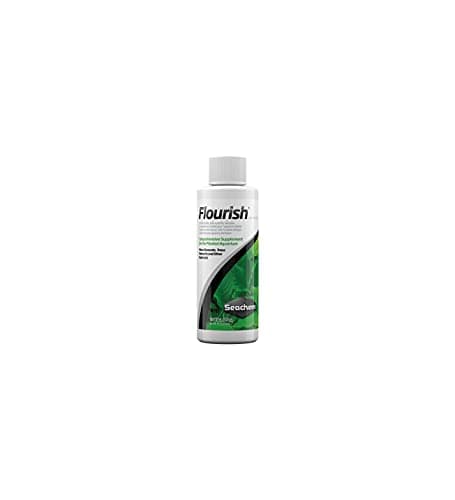
01Seachem FlourishSeachem FlourishA low-tech planted nano where the fish already supply the nitrogenFor the water column8.3$9.99 - View on Amazon
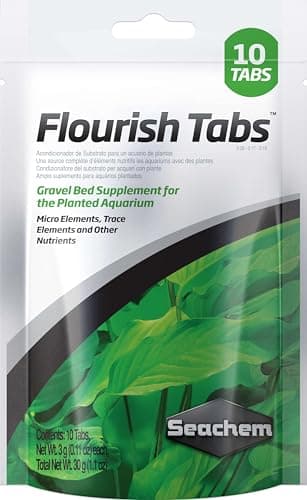
02Seachem Flourish TabsSeachem Flourish TabsCrypts, swords and anything else that feeds through its rootsFor root feeders8.1$12.99 - View on Amazon

Scores are ours and editorial. They are never published as review or rating markup, because we have not tested these products.

Start with what your tank is actually short of

Plants need macronutrients - nitrogen, phosphorus, potassium - and a long list of micronutrients and trace elements. The fertilizer aisle is built around tanks that are short of the macros, because that is what a heavily planted, lightly stocked, CO2-injected display tank runs out of first.

A stocked nano tank is not that tank. You have a fish in a small volume, fed daily. Nitrogen arrives continuously as ammonia, gets processed to nitrate, and accumulates until you change water - the whole reason nitrate control is a maintenance job is that a stocked tank makes more of it than slow plants can use. Phosphorus arrives with the food.

So in the tank this site is written for, dosing a macro-heavy all-in-one is adding more of what you already have too much of. What the plants are genuinely short of is iron and the trace elements - and in the case of root feeders, the nutrients they take from the substrate rather than the water.

What we ranked these on

We have not run growth trials. There is no test bench here, so every criterion below is either published by the manufacturer or is arithmetic you can redo.

Published dosing precise enough to convert. This is the criterion that decides the page, and it is why both picks are Seachem. A label that says “a capful per tank” cannot be scaled to 4.3 gallons of water; one that publishes milliliters per 60 gallons can.

Honest about what it omits. Seachem states plainly that Flourish does not contain significant nitrogen or phosphorus. That disclosure is worth more than a longer ingredient list, because it tells you which half of the problem the bottle solves.

Suits a low-tech, stocked tank. Not a show tank. The plants we recommend are published at 10-20 PAR with no CO2 requirement, and they grow slowly by design.

Nano dose usability. Whether the correct dose is something a human can measure. This is where liquid fertilizers struggle and tablets win.

Value per gallon treated. At nano volumes almost anything lasts years, which makes the smallest bottle the right purchase nearly every time.

The nano dose, worked

Seachem publishes 1 capful - 5 mL - of Flourish for each 250 L / 60 US gallons, once or twice a week. Convert that to the tanks this site covers and you get the same faintly absurd result as the dechlorinator.

TankActual waterFlourish per dose
Rated 5 gal4.3 gal0.36 mL
Rated 10 gal8.5 gal0.71 mL
Rated 20 gal17 gal1.42 mL

A third of a milliliter. The cap holds 5 mL, so in a rated 5-gallon you are being asked for roughly one fourteenth of a capful. Use a 1 mL syringe - the same one the conditioner needs - and note the one difference from Prime: Seachem publishes no overdose tolerance for Flourish, so the “a few drops is close enough” shortcut that works for a dechlorinator is not sanctioned here. Measure it.

The tabs dose is published as a spacing, which is better

Seachem gives Flourish Tabs as one tab per 10-15 cm / 4-6 inch radius, and states that a standard 10-gallon aquarium requires six. That is a rule you can apply to your own footprint before you buy: a standard 10-gallon base is 20 by 10 inches, so six tabs covers 200 square inches - roughly one tab per 33 square inches. A Fluval Spec V base of 19.5 by 6.5 inches is about 127 square inches, which comes out at four tabs. Replace every three to four months, per Seachem.

Water column versus roots: the split that decides your purchase

Plants take nutrients in two ways, and the two products here are not competitors - they address different halves.

Rhizome plants and moss feed from the water column. Anubias, java fern and java moss attach to hardscape and have no meaningful root system in the substrate. A liquid supplement is the only way to reach them, and root tabs under them do precisely nothing.

Crypts and grasses feed from their roots. Aquarium Co-Op names root tabs or a nutrient-rich substrate for both Cryptocoryne wendtii and dwarf sagittaria. A liquid dose in the water column reaches those plants far less efficiently.

So the honest answer for most readers of this site is: look at what you actually planted. A tank of anubias and java fern tied to wood wants the liquid and nothing else. A tank with crypts rooted in gravel wants the tabs. A mixed tank wants both, and that is a perfectly reasonable place to end up.

If your substrate is already a soil, wait

Fluval Stratum and Bio Stratum are nutrient-bearing soils, and a new tank set up on one has a nutrient reserve in the substrate already. Adding root tabs on day one is spending money to solve a problem you do not have yet - and in a nano tank, surplus nutrients in the water are an algae input rather than a plant input.

The published guidance from Aquarium Co-Op on crypts is the useful framing: add root tabs when leaves yellow and die back after a couple of months, which is the plant telling you the substrate reserve has run down. Which soil you chose determines how long that takes.

The algae trade nobody puts on the bottle

Every nutrient you add is available to algae as well as to plants. In a tank with fast-growing, well-lit plants the plants win the competition. In a low-tech nano full of slow-growing rhizome species under a modest light, they may not.

That is the real reason this page recommends restraint rather than a dosing schedule. Start at the published dose once a week rather than twice, and watch what happens for a month. If the plants are pale and new growth is small, go to twice. If the glass starts greening faster than it did, go back - and shorten the photoperiod before you change anything else, because light is usually the lever, not fertilizer.

What we did not rank, and why

All-in-one fertilizers with macros. They are the right product for a high-tech planted tank and the wrong one for a stocked nano, for the reason this page opens with. If your tank has no fish in it, this recommendation inverts.

Aquarium Co-Op Easy Green. It is an excellent, widely recommended all-in-one with published dosing, and we could not resolve it to a verified Amazon listing - it is sold direct. Rather than point you at a third-party reseller we cannot verify, we have left it off. If you already buy from Co-Op, it is a reasonable alternative to the liquid pick here, with the same macro caveat reversed: it does carry nitrogen.

Liquid carbon products. Not fertilizers. We set out what we will and will not say about them on the CO2 page.

DIY dry salts. Cheaper per dose by a wide margin and genuinely the right answer for someone dosing several tanks. At a single nano tank the weighing equipment costs more than years of bottled supplement.

What we cannot tell you

Whether your plants are actually deficient. Nutrient deficiency in aquatic plants is diagnosed from leaf symptoms, and the published symptom guides disagree with each other often enough that we are not going to add another. What we can tell you is what each product contains, what it omits, what the manufacturer says to dose, and what that works out to in 4.3 gallons of water.
The write-ups

Every pick, in full

01 / For the water columnSeachem Flourish

Seachem

8.3 / 10

Seachem Flourish

A comprehensive trace-element supplement, and the label is doing more work than most buyers notice. Seachem publishes that it supplies calcium, magnesium, iron and other trace elements - and states outright that it 'does not contain significant levels of nitrogen or phosphorus'. So it is not an all-in-one fertilizer, whatever the shelf position implies. In a low-tech nano with fish in it, the nitrogen and phosphorus arrive from feeding anyway, which is exactly why this is the right bottle for this site's reader and the wrong one for a high-tech tank.

$9.99 - View on Amazon

#ad Price as of November 2, 2026, from Amazon. Prices change. How this site is funded.

Published specifications for the Seachem Flourish, with the page each figure was read from
SpecificationValueSource
TypeComprehensive supplement providing micro elements, trace elements and other nutrientsSeachem published product page
ContainsCalcium, magnesium, iron, plus boron, chlorine, cobalt, copper, manganese, molybdenum, sodium and zincSeachem published product page
Does NOT containSignificant levels of nitrogen or phosphorus - stated by Seachem, not inferredSeachem published product page
Dose1 capful (5 mL) for each 250 L / 60 US gallons, once or twice a weekSeachem published dosing directions
Overdose toleranceNot published on the product page - unlike Prime, no multiple of the standard dose is stated as safe, so measure rather than estimateAbsence recorded by Glass & Gravel

What it does well

  • Published dosing precise enough to convert to a nano tank
  • Seachem states plainly what it omits, which most fertilizer labels do not
  • Trace elements are the half a fish-stocked nano is genuinely short of
  • A small bottle lasts a nano keeper years at the published rate

What it does not

  • Not an all-in-one - no meaningful nitrogen or phosphorus
  • The nano dose is a fraction of a milliliter, so a syringe is not optional
  • No published overdose tolerance, unlike Prime
  • Does nothing for root feeders, which take their nutrients from the substrate

Skip this one if

You are running a heavily planted, lightly stocked tank with CO2. That tank needs macros, and this bottle deliberately does not carry them.

How it scores, by criterion

Published spec depth9.0
Nano dose usability5.5
Value per gallon treated9.5
Suits a low-tech tank9.0
Completeness as a fertilizer4.5
02 / For root feedersSeachem Flourish Tabs

Seachem

8.1 / 10

Seachem Flourish Tabs

Root tablets, and the only fertilizer on this site whose published dosing is given as a spacing rather than a volume: one tab for every 4 to 6 inch radius, with Seachem stating that a standard 10-gallon needs six, replaced every three to four months. That spacing rule is what makes them plannable in a nano - you can count the tabs your footprint needs before you buy.

$12.99 - View on Amazon

#ad Price as of November 2, 2026, from Amazon. Prices change. How this site is funded.

Published specifications for the Seachem Flourish Tabs, with the page each figure was read from
SpecificationValueSource
TypeGrowth-stimulating tablets for plant rootsSeachem published product page
ContainsIron, manganese, magnesium, calcium, potassium, inositol, choline, B12, biotin, plus amino acids and vitaminsSeachem published product page
DoseOne tab per 10-15 cm / 4-6 in radius of substrate; a standard 10 gallon aquarium requires 6 tabsSeachem published dosing directions
Replacement intervalNew tablets once every three to four monthsSeachem published dosing directions
Plants suitedNot published on the product page by species - Seachem notes only that some plants take in more from their roots and some more from their leavesAbsence recorded by Glass & Gravel

What it does well

  • Dosing published as a spacing, so a nano footprint can be planned exactly
  • Feeds the root feeders a liquid supplement cannot reach
  • Three to four months per placement - close to a set-and-forget item
  • A 10-tab pack outlasts most nano tanks for a year or more

What it does not

  • Useless for rhizome plants and moss, which is most of what this site recommends
  • Pushing tabs into a shallow nano bed disturbs the scape every few months
  • No published species guidance, so placement is judgment
  • A crushed or exposed tab clouds a small tank quickly

Skip this one if

Every plant in your tank is tied to hardscape. Anubias, java fern and moss take nothing from the substrate, and tabs under them do nothing.

How it scores, by criterion

Published spec depth8.5
Nano dose usability9.0
Value per gallon treated8.5
Suits a low-tech tank8.5
Completeness as a fertilizer6.0

How these picks were chosen

Everyone in this category says they tested twenty tanks. We have not tested any, and we say so. What we did instead: read the manuals, compile the published specifications, compute the wattage and the turnover against the tank’s real water volume rather than its shelf label, and show the arithmetic so you can check it.

The full method, including what we refuse to claim.

Questions

Frequently asked

Do I need fertilizer in a betta tank with live plants?

Often less than you would think. A stocked tank generates nitrogen and phosphorus continuously from feeding, so what the plants are typically short of is iron and trace elements. Start with a trace supplement at the published dose once a week, not an all-in-one.

How much Seachem Flourish for a 5 gallon tank?

On the published dose of 5 mL per 60 US gallons, a rated 5-gallon holding 4.3 gallons needs 0.36 mL. Use a 1 mL syringe - and note Seachem publishes no overdose tolerance for Flourish, so measure rather than estimate.

Root tabs or liquid fertilizer?

Whichever matches your plants. Anubias, java fern and moss attach to hardscape and feed from the water column, so they need the liquid. Crypts and grasses feed from their roots, so they need tabs. A mixed tank reasonably uses both.

How many root tabs does a nano tank need?

Scale from Seachem’s published figure: six tabs for a standard 10-gallon, whose base is 20 by 10 inches - about one tab per 33 square inches. A 19.5 by 6.5 inch Spec V footprint works out at roughly four. Replace every three to four months.

Will fertilizer cause algae?

It can, because algae uses the same nutrients. In a low-tech nano with slow-growing plants the competition is not one-sided in the plants’ favor. Dose once weekly rather than twice to start, and if algae increases, shorten the photoperiod before changing the dose.

Do I need fertilizer if I used an aquasoil?

Not at first. Nutrient-bearing soils carry a reserve, and adding tabs on day one just puts surplus nutrients where algae can reach them. Add root tabs when rooted plants start yellowing after a couple of months - that is the substrate telling you it has run down.

Sources

Where the figures on this page came from

  1. Seachem Flourish - published composition and dosing directions
  2. Seachem Flourish Tabs - published composition and dosing directions
  3. Aquarium Co-Op, Cryptocoryne Wendtii - published care requirements
Read next